
Is an Electric Vehicle Covered Under California’s Lemon Law?
Yes, electric vehicles are covered under California’s lemon law. If you own or lease an EV in Los Angeles with persistent defects the manufacturer cannot fix after a reasonable number of repair attempts, you may be entitled to a full buyback or replacement. Under the Song-Beverly Consumer Warranty Act, California’s lemon law covers EVs with persistent issues affecting use, value, or safety, the same protections that apply to gas-powered vehicles, extending to your EV’s battery system, charging components, and software.
If you are dealing with a defective electric vehicle in Los Angeles, Knight Law Group can help you understand your rights. Call 833.208.8181 or reach out to our team today to discuss your potential claim.
How California’s Lemon Law Protects EV Owners
California’s Song-Beverly Consumer Warranty Act provides robust protections for EV owners and lessees. The governing statutes, including California Civil Code §§1790-1795.8 (with motor vehicle-specific provisions beginning at §1793.2 and the Tanner Consumer Protection Act at §1793.22), establish the legal framework for lemon law claims. When a new or leased EV develops a substantial defect that the manufacturer or authorized dealers cannot repair within a reasonable number of attempts, the owner may qualify for a repurchase or replacement.
The law applies to defects covered under the manufacturer’s warranty, including problems with the electric motor, charging system, battery failures, and software malfunctions that impair vehicle operation. California does not limit lemon law claims to traditional drivetrain components, meaning your EV’s unique systems receive the same statutory protections.
💡 Pro Tip: Keep every repair order, service invoice, and written communication with the dealer and manufacturer from the moment you first report a problem. Clear documentation turns a vague complaint into a strong lemon law claim.
Common EV Defects That May Trigger a California Lemon Law Claim
Electric vehicles present unique defect patterns that differ from traditional gas-powered cars. California EV owners commonly report the following defects:
- Battery and range problems, including unexpected capacity loss
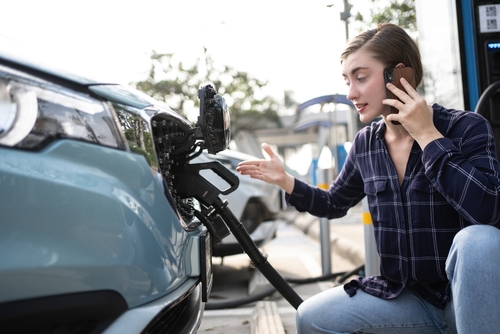
- Charging failures, port malfunctions, and fast-charging glitches
- Software bugs that affect safety and drivability
- Hybrid drivetrain vibration and transmission issues
- Thermal management failures and repeated warning lights
When these issues recur despite multiple dealer visits, they may constitute a substantial impairment of use, value, or safety under the Song-Beverly Act. Software glitches, charging errors, and battery-related defects are among the most common grounds for an EV lemon law claim in California.
What Qualifies as a "Lemon" Under the Song-Beverly Act for Electric Vehicles?
A vehicle qualifies as a lemon when it has a warranty-covered defect that substantially impairs its use, value, or safety and persists after a reasonable number of repair attempts. Under California Civil Code §1793.22, a rebuttable presumption arises within the first 18 months or 18,000 miles (whichever comes first) if the same safety defect likely to cause death or serious bodily injury has been subject to two or more repair attempts; or the same non-safety substantial defect has been subject to four or more repair attempts; or the vehicle has been out of service for 30 or more cumulative days.
EV Battery Warranty Coverage
EV batteries typically carry warranties of 8 years or 100,000 miles, and in California, these separate battery warranties are covered under lemon laws. This is a significant advantage for California EV owners, as some states exclude battery capacity loss from protection. If your EV battery is failing or degrading prematurely within the warranty period, you may have a valid claim.
Software and Charging System Defects
Software malfunctions and charging system failures are among the most frustrating EV-specific problems, affecting everything from basic operation to critical safety features like regenerative braking and collision avoidance. When these issues persist after multiple repair attempts, they generally meet the threshold for a lemon law claim.
💡 Pro Tip: Take screenshots or photos of warning messages, error codes, or unusual dashboard displays each time a problem occurs. Digital evidence is especially important for software-related defects that may not leave a physical trace.
How a Lemon Law Attorney in Los Angeles, CA Can Strengthen Your EV Claim
Working with a lemon law attorney in Los Angeles, CA gives you an advocate who understands the nuances of EV defect claims. Electric vehicle technology involves complex battery management systems, proprietary software platforms, and high-voltage charging components that require familiarity with how these issues translate into legal claims under the Song-Beverly Act.
Documentation is the foundation of every successful lemon law case. Your attorney can use your evidence to establish a pattern of recurring defects, demonstrate the manufacturer’s failure to repair, and pursue maximum recovery.
| What to Document | Why It Matters |
|---|---|
| Repair orders and service invoices | Proves the number of repair attempts and days out of service |
| Photos/screenshots of warnings | Captures evidence of software or system malfunctions |
| Written communications with dealer | Shows you reported the problem and gave the manufacturer a chance to repair |
| Dates vehicle was in the shop | Supports the 30-day out-of-service threshold |
| Purchase or lease agreement | Establishes warranty coverage and vehicle details |
💡 Pro Tip: After each repair visit, request a copy of the final repair order before leaving the dealership. Confirm that the technician’s notes accurately describe the symptoms you reported.
Recent Changes to California’s Lemon Law That Affect EV Owners
California’s lemon law landscape has shifted significantly in the past two years. In 2024, the legislature passed Assembly Bill 1755 (AB 1755), which established new filing deadlines requiring claims within one year after warranty expiration and no later than six years from original delivery, whichever comes first. AB 1755 also introduced pre-suit notice requirements and mandatory mediation.
SB 26 and the Opt-In Framework
In 2025, SB 26 created an opt-in framework allowing manufacturers to voluntarily adopt AB 1755’s new procedures. Manufacturers that opted in are bound by the new rules for at least five years, while those that didn’t opt in remain under the prior framework. Some major manufacturers opted into the new procedures while others retained the original framework. Because the opt-in list is published annually by the California Department of Consumer Affairs and can change, consulting a California lemon law attorney is critical to understanding which rules apply to your vehicle.
SB 766 and EV Consumer Protections
California also enacted SB 766, which prohibits dealers from charging EV buyers for useless add-ons like oil changes. While separate from a lemon law claim, this new California car-buying law reflects the state’s growing focus on protecting EV consumers.
💡 Pro Tip: If you purchased your EV within the last few years and are experiencing ongoing warranty defects, do not delay pursuing your claim. AB 1755 established shorter filing deadlines that could limit your legal options.
What Happens When a Manufacturer Buys Back a Lemon EV?
When a manufacturer repurchases a vehicle under the lemon law, specific consumer protection rules govern the process. The manufacturer must obtain title in its own name, affix a lemon law buyback decal to the vehicle’s left-door frame, and notify any future transferee of the warranty defects in writing before resale. Vehicles reacquired on or after January 1, 1996, must be branded "LEMON LAW BUYBACK" on their title under California’s lemon law buyback and warranty return rules.
Any dealer reselling a lemon law buyback must also include a signed disclosure statement from the new buyer acknowledging the vehicle was returned due to a defect pursuant to consumer warranty laws.
💡 Pro Tip: If shopping for a used EV, always check the vehicle’s title history for a "LEMON LAW BUYBACK" brand. This branding signals the vehicle was previously repurchased due to unresolved warranty defects.
Frequently Asked Questions
1. Does California’s lemon law cover battery degradation in electric vehicles?
In California, EV battery warranties (typically 8 years or 100,000 miles) are covered under state lemon laws. However, the defect must substantially impair the vehicle’s use, value, or safety. California provides broader coverage than some states that exclude battery capacity loss from lemon law protections.
2. How many repair attempts do I need before my EV qualifies as a lemon?
Under California Civil Code §1793.22, a rebuttable presumption arises within the first 18 months or 18,000 miles (whichever comes first) if the same safety defect likely to cause death or serious bodily injury has been subject to two or more repair attempts; or the same non-safety substantial defect has been subject to four or more repair attempts; or the vehicle has been out of service for 30 or more cumulative days. A Lemon Law Attorney in Los Angeles, CA can evaluate whether your situation meets the statutory threshold.
3. Are leased electric vehicles covered under California’s lemon law?
Yes. California’s Song-Beverly Consumer Warranty Act covers both purchased and leased vehicles. If your leased EV has a recurring warranty defect, you may be entitled to a replacement or refund of lease payments, subject to a mileage offset.
4. What if the manufacturer says my EV’s software glitch is "normal"?
A manufacturer’s claim that a defect is normal does not automatically bar a lemon law claim. If the software issue substantially impairs your vehicle’s safety, use, or value and persists after repair attempts, it may still qualify. Thorough documentation strengthens your position.
5. Do the 2024 lemon law changes affect my EV claim?
They may. AB 1755 established new filing deadlines requiring claims within one year after warranty expiration and no later than six years from original delivery. The law also introduced pre-suit notice requirements and mandatory mediation. Under SB 26, some manufacturers opted into the new framework while others retained prior rules. Understanding which rules apply to your vehicle is critical.
Protecting Your Rights as a California EV Owner
California’s lemon law provides meaningful protections for electric vehicle owners facing persistent defects. From battery failures and charging malfunctions to software bugs and drivetrain issues, the Song-Beverly Act gives you a path to a buyback or replacement when the manufacturer cannot fix the problem. Recent legislative changes make it essential to act quickly, document thoroughly, and understand which rules apply to your vehicle.
If you own a defective EV in Los Angeles and believe you may have a lemon law claim, Knight Law Group is ready to help. Call 833.208.8181 or contact us today for a consultation about your California EV defect warranty claim.