
The most useful explanation of this vibration usually comes across a service counter rather than out of a warranty booklet. A technician who has taken a few of these apart will say the gears are fine and that nothing has broken in the way an owner expects.
What has gone wrong is a clutch that is supposed to slip a little and has stopped slipping cleanly. That one sentence accounts for the buzz through the floor, and for why fresh fluid puts it away only for a while.
Chevrolet, GMC and Cadillac owners who paid for one fluid service and felt the buzz return a few thousand miles later are standing at exactly that point. The rest of this is what the technician was getting at.
The Clutch That Slips and Grabs Inside Your Torque Converter
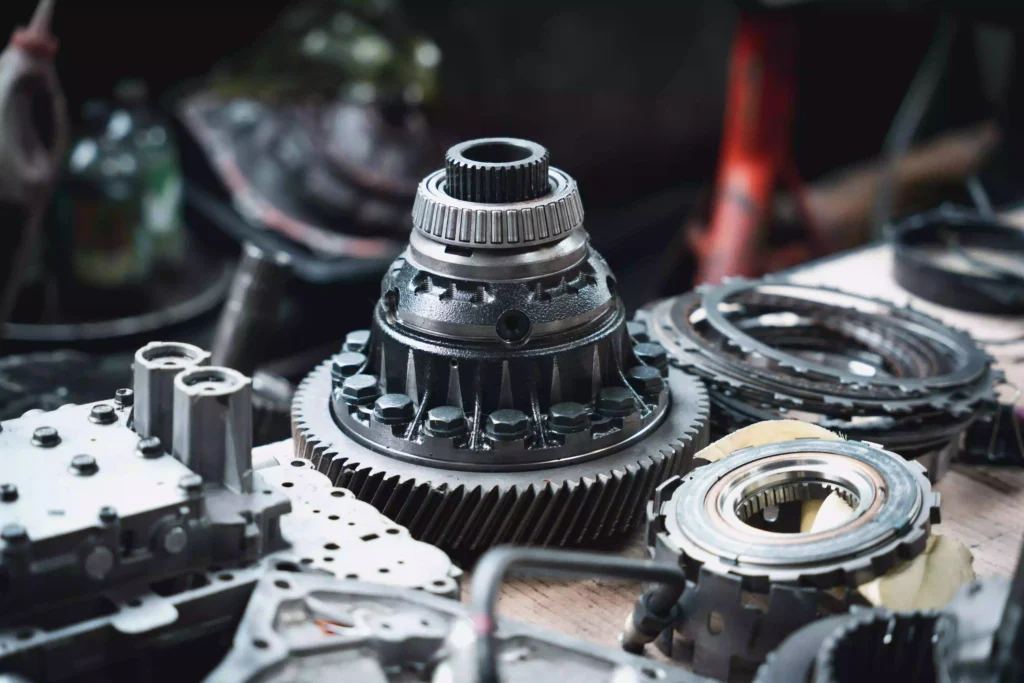
Between the engine and the gearbox sits the torque converter, which passes power through fluid rather than a hard connection. Inside it is a clutch that squeezes together at cruising speed so the engine and the transmission turn as one unit, which is what keeps highway mileage respectable.
The 8-speed does not simply snap that clutch on and off. It holds it in a measured slip, letting the two faces slide against each other a controlled amount so power arrives smoothly instead of with a bump.
The transmission fluid gives those faces their grip while they slide. When the fluid loses that quality, the clutch stops sliding evenly and starts catching and letting go, many times per second.
That flutter is what reaches your seat, close to the feel of a tire wandering onto the rumble strips. A shuddering transmission is rarely one dramatic failure; it is a clutch surface losing hold and grabbing back faster than you can count, the same chatter you feel easing out a manual clutch too slowly on a hill.
It also explains why owners end up doubting themselves. The vibration arrives only under light steady load, so pressing harder or lifting off makes it disappear, which is exactly what happens on a short road test.
Why the Fluid Exchange Calms a Shudder for a While
General Motors traced the problem to the fluid rather than the hardware. Transmission fluid draws in moisture over the years, and once it does, its frictional behavior changes enough that the converter clutch can no longer hold a clean slip.
So the GM 8-speed transmission shudder fix at the dealership is a fluid job, not a rebuild. Out comes the old fluid, in goes an updated low viscosity synthetic, and the vibration usually leaves with it.
The detail worth knowing is that this is not a drain and fill. Done correctly, roughly twenty quarts get pushed through the transmission and the cooler lines so almost none of the old fluid stays behind, and a partial service is a common reason a torque converter shudder fix does not take.
Owners who get it done right describe driving home smooth for the first time in months. That part is real. The question is what happens fifteen thousand miles later.
What Fresh Fluid Cannot Undo Once the Clutch Material Is Worn
Think about what your converter clutch was doing through all those months you felt the vibration. It was slipping and catching under load, thousands of times on every drive, with fluid that had stopped protecting it.
Friction material wears, the surface glazes, the lining gives up thickness, and pieces of it end up circulating with the fluid. New fluid restores what the fluid controls. It cannot put back what the clutch face has already lost.
That is the honest answer to why the shudder comes back. The wear the old fluid left behind is mechanical, and mechanical wear does not reverse when the pan is refilled.
There is a tell for it. If the pan or filter showed dark debris or clutch material at your service visit, the fluid was never the whole story on your vehicle, and a second exchange is unlikely to hold longer than the first.
Replacing the converter itself is the next step up, and even that gets treated cautiously in the trade, because the condition has a habit of coming back after enough miles.
Silverado, Sierra and Yukon Owners Reporting the Same Vibration
Complaint volume sits mostly with the 2015 through 2019 Chevrolet Silverado and GMC Sierra, with the Yukon not far behind. All three run the eight speed automatic that General Motors calls the 8L90, and the lighter duty 8L45 turns up in smaller Chevrolet and Cadillac cars.
The transmission shudder symptoms owners describe to federal regulators repeat almost word for word:
- A vibration through the floor and the seat at light steady throttle on level pavement
- Shaking on the one to two shift hard enough that everyone in the vehicle gets jarred
- A slipping feel and a high pitched hum when pulling out into traffic
- Harsh or delayed engagement when the transmission finally picks a gear
- Metal or clutch debris found in the pan at a service visit
- The converter locking up at random with no warning before a shift
The last two items on that list are a different order of trouble from a buzz through the floor. One Sierra owner lost power at highway speed with the gears disengaging, and large amounts of metal debris turned up afterward. A Yukon owner had a converter condemned and then waited with no repair date, because no part was available.
General Motors handled the shudder through bulletins written for its dealers, and those bulletins say plainly on their face that they are not a recall. That is why a hunt for a Chevy Silverado torque converter recall, or for the same thing under any other nameplate in this family, comes back empty. The NHTSA recall search will confirm as much for one particular vehicle.
What owners get instead is a repair one at a time, under whatever factory coverage is left. Some owners file this in with the general shake complaints that have followed these trucks for years, a loose label sitting over several unrelated vibrations. The one coming from the converter clutch arrives at light throttle and leaves the moment you push through it.
As of mid 2026, a class action over these transmissions remains unresolved, which leaves an owner with no settlement to join and nothing to gain by waiting out another fluid service.
Every Fluid Exchange Counts as a Repair Attempt
California answers this with the Song-Beverly Consumer Warranty Act. Most drivers just call it the lemon law. It reaches a defect still under factory warranty that takes a serious bite out of what your vehicle is worth, what you can do with it, or how safe it is to drive, once the manufacturer has had enough tries at a repair.
Every fluid exchange belongs in the count of repair attempts, and so does the visit where you were told this is normal for the eight speed. That includes visits that ended with nothing found, because an intermittent fault is the rule with this defect rather than a mark against you.
Where that line is crossed, the manufacturer either buys the vehicle back or replaces it. A buyback works from your purchase price, less a deduction tied to the odometer reading when you first brought the vehicle in for repair of the shudder, and it can take in towing or a rental you covered while the truck sat at the dealership.
We take these claims for California drivers of Chevrolet trucks and cars, for GMC owners, and for Cadillac owners whose cars run the smaller version of this transmission. Before you talk to anyone, our California lemon law guide shows what a service visit has to look like to count as an attempt. Send what the dealership wrote on those fluid visits to Lemon Law Help and someone here will read it against that standard without charging you for the answer.
What To Ask Before You Pay for Another Fluid Service
One question decides whether a second fluid service is worth the money. Ask whether the pan or the filter showed any debris last time, and ask for that answer written on the repair order rather than spoken at the counter.
Debris means friction material has already left the clutch face, and clean fluid does not put any of it back. A yes to that turns the next exchange into a way of buying a few thousand quiet miles rather than a repair.
The second question follows from the first. Ask whether the service being quoted is a full exchange or a drain and fill, because a partial job is the ordinary reason the quiet lasts a month instead of a year.
Then there is the question the service department cannot answer for you. If the shudder has already come back after a proper exchange, and the gap keeps shrinking, note the date and mileage each time, because the next thing worth buying is not fluid.
Reviewed by Roger Kirnos, Managing Attorney, California State Bar No. 283163.