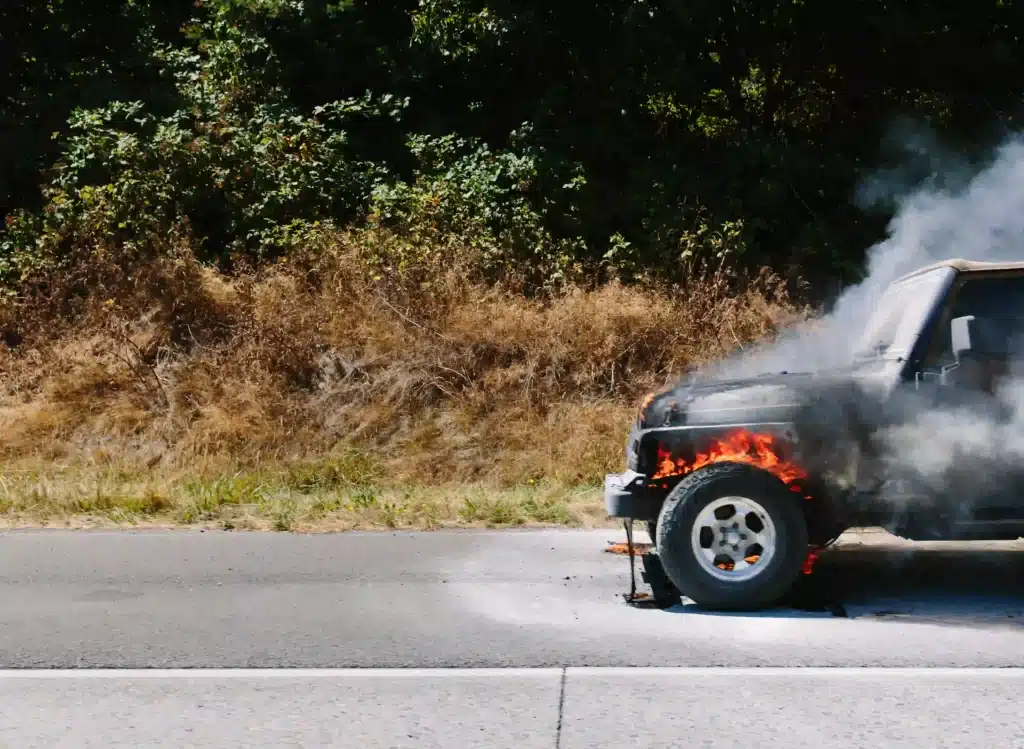

Chrysler has recalled roughly 320,000 Jeep Wrangler and Grand Cherokee plug-in hybrids because the high voltage battery can fail internally and catch fire. The instruction that came with the letter was to park the vehicle outside and stop charging it.
Written down, the instruction is one sentence. Lived out, it rearranges where you park and what the vehicle in front of your house is actually good for. The charging unit you paid an electrician to mount on the garage wall has not been touched in months, and the Jeep sits at the curb.
Wrangler and Grand Cherokee plug-in hybrid owners have been living that way since the warning went out. This is a recall with an unusual shape: a hazard you cannot see, an instruction not everyone can follow, and a repair that arrived long after the warning did.
Whether Your 4xe Is One of the Jeeps Told To Park Outside
The recall reaches only the plug-in versions of two Jeeps: Wrangler 4xe models built from 2020 through 2025, and Grand Cherokee 4xe models from 2022 through 2026. A Wrangler or Grand Cherokee with no charge port is not part of this at all.
The trouble sits inside the high voltage battery pack. Chrysler reported that some packs were built with cells vulnerable to separator damage, and that the damage, combined with other reactions inside the cell, can lead to a fire. It estimated that about five percent of the recalled vehicles carry the defective cells.
Five percent is a small share and a very large number at once. Nobody at your dealership can tell from the outside which group your Jeep belongs to, so the warning went to every owner. That is how a Wrangler 4xe PHEV recall touching a minority of packs ended up changing the daily routine of every household on it.
Some 4xe owners are also caught by a separate Jeep recall covering engine trouble, which is a different defect with its own repair. This page is about the battery.
Your vehicle identification number, entered at the NHTSA recall lookup, confirms whether your Jeep is included and whether the work has been recorded.
Who Owes You for a 4xe You Cannot Charge
Chrysler has told every household on this recall to keep the Jeep outdoors and off the charger until the work is done. That instruction is where California warranty law starts paying attention.
California’s Song-Beverly Consumer Warranty Act answers exactly this situation. The law weighs what a defect does to a vehicle’s use, its value, and its safety, and safety is the whole of the question here. Chrysler settled it in writing the day it told you to keep this Jeep away from your house and off the charger.
The days matter too. When this Jeep finally goes in for the battery work, the weeks it spends parked at a dealership carry weight in California by themselves, not only as another repair visit on the record.
Money you spent before a remedy existed can also be in play. Chrysler has a general reimbursement plan on file with regulators, so invoices from that stretch are worth finding.
The safety defect is the reason a claim exists. What the instruction has cost you month by month is the measure of it.
How these claims run against this manufacturer sits on our Jeep lemon law page. Cases are handled on contingency in California, and the statute makes the manufacturer responsible for a winning owner’s fees and costs.
Lemon Law Help offers a free case review, and it costs nothing to find out whether the months your Jeep has spent at the curb belong in a claim.
The Battery Work Jeep Dealers Are Doing, and the Wait Behind It
When Chrysler filed this recall at the end of October 2025, there was no fix. Dealers were notified within days, and the first owner letters did not reach mailboxes until the middle of December, carrying the instruction to park outdoors and stay off the charger.
A remedy does exist now. Dealers update the battery pack control module software, run the pack through a diagnostic routine, and replace the assembly when the results call for it, at no charge to you.
Because the first step is a software flash, this is often searched as a Jeep Grand Cherokee PHEV software recall. Software is only the entry point. The inspection that follows it decides whether you drive home the same day or leave the vehicle behind.
The letters have come in waves. The first batch, the one carrying the warning, went out in mid December, and federal records show the follow up notice about the repair itself scheduled for a later date, so eight months on there are owners who have never been called in. The ones who have been through it write about backordered packs and loaner cars sitting in the driveway for a month or longer.
Why This 4xe Battery Recall Is Chrysler's Second Attempt
The most useful thing to understand is why this recall exists. Chrysler ran a software campaign on the same battery defect the year before, and by October 2025 it had told regulators it knew of nine fires in vehicles that already had that update.
The company concluded that the earlier software could not detect certain abnormalities inside the pack. It also reported one injury connected to the defect as of that month.
So an owner who asks whether this repair will hold is not being difficult. A Jeep battery fire recall that follows an earlier attempt on the same cells earns that question honestly.
What comes back from owners afterward is uneven. Some leave with a software update and nothing else. Others wait weeks for a pack, then report hybrid system warnings or a loss of electric drive after the work was signed off.
When that is your file, you are no longer waiting on a recall. You are looking at a warranty problem, and our California lemon law guide covers what a repurchase actually pays back on a vehicle like this one.
Living With the Cord You Are Not Supposed To Use
All of that sits on top of what the instruction costs a household every day. It covers where you park and whether you plug in: keep the Jeep away from structures and other vehicles, and leave it off the charger, because the fire risk falls as the charge level falls.
If you own a house with a driveway, the parking rule is an inconvenience. If your only space is assigned in a shared or underground garage, it is not something you can comply with at all. Owners in that position park on the street and hope the building says nothing.
The charging rule costs money every day. Electric miles are the entire reason a 4xe carries the price it does, and an unplugged plug-in hybrid is a heavier gasoline vehicle hauling a pack it is not allowed to use. The commute that used to run on your home electricity rate now runs on fuel.
Then there is the wall unit, and whatever the installation cost you. It is still wired in and still doing nothing.
A Safer Parking Spot Is Not a Solution
Look at what the instruction is asking. The safest place for the vehicle you bought is away from the building where you sleep.
That is not a maintenance inconvenience. It is a manufacturer stating in writing that it does not yet trust the battery it sold you, and asking you to absorb the consequence in front of your house until it does.
Measure the 4xe against what it has actually delivered under that instruction and the verdict writes itself. Loss of use counted in months rather than days is precisely what California warranty law exists to price. Put a number on the months your household has worked around this Jeep, then ask what that number is worth before another one is added to it.
Reviewed by Roger Kirnos, Managing Attorney, California State Bar No. 283163.