Nissan Automatic Emergency Braking Lawsuits: What You Should Know
Home » Manufacturers » Nissan Lemon Law: What You Need to Know » Automatic Emergency Braking

If you experience Nissan AEB problems, we can help.
Nissan has equipped many 2020 and newer models with automatic emergency braking, and its own dealer bulletins describe false braking on several of them. Class action lawsuits claimed these Automatic Emergency Braking (AEB) systems are defective and make vehicles unsafe to drive. If this happens to your vehicle, it might be considered a lemon.
Nissan AEB System FAQ
Owners say Nissan’s emergency braking can kick in when nothing is in the road. The answers below cover which models are named and what Nissan has done about it.
Which Nissan Vehicles Have Problems With AEB?
Nissan has sent dealers repair bulletins for false braking, AEB warning lights or a blocked front radar on certain 2020 to 2025 models of these vehicles:
- Nissan Rogue and Rogue Sport
- Nissan Pathfinder
- Nissan Murano
- Nissan Altima
- Nissan Maxima
- Nissan Armada
- Nissan Leaf
- Nissan Sentra
- Nissan Kicks
- Nissan Versa
- Nissan Frontier
- Nissan Titan
Each bulletin covers only certain vehicles, depending on build date and the warning or code stored. Other Nissan models may still have recurring problems with their Automatic Emergency Braking systems.
You do not have to opt out of anything first, whether your problem is false braking or the autonomous emergency braking warning light.
What’s Wrong With Nissan’s AEB System?
According to a class action lawsuit, defective sensor modules caused the emergency braking system to deactivate or malfunction. As a result, the autonomous emergency braking systems can detect non-existent obstacles, provide false alarms or trigger the brakes despite no obstacles being present.
When Automatic Emergency Braking systems randomly apply the brakes, the vehicles can randomly stop or decelerate in unsafe driving situations. As you might imagine, it’s easy for problems with automatic braking systems to spiral out of control.
Owners of 2020 and newer Nissans have told NHTSA about false braking beside traffic waiting to turn, under bridges and overpasses, and over railroad tracks. Sudden braking with nothing ahead makes it harder to get out of the way of danger, and one owner said it could have caused a rear-end crash.
In some situations, the Automatic Emergency Braking system may confuse regular driving environments for imminent obstacles. One 2021 Murano owner said the vehicle slammed on the brakes halfway up a parking garage ramp, with no cars ahead. Nissan has also given dealers a fix for false emergency braking on some 2020 to 2024 Murano vehicles.
These class action lawsuits also alleged that the emergency braking feature randomly stops working, making it unreliable even if the feature otherwise functioned as intended. In such cases, a warning such as “Unavailable Front Radar Obstruction” or “Front Sensor Blocked” shows up on the dashboard.
How Does Nissan Automatic Emergency Braking Work?
Automatic/Forward Emergency Braking is an autonomous driving technology that is supposed to prevent crashes by detecting obstacles and, if needed, depressing the brakes.
On many 2020 and newer models, Automatic Emergency Braking is part of a technology suite called Nissan Safety Shield 360. This suite comes with safety technologies such as lane departure warning, blind spot warning, rear cross traffic alert and rear automatic braking.
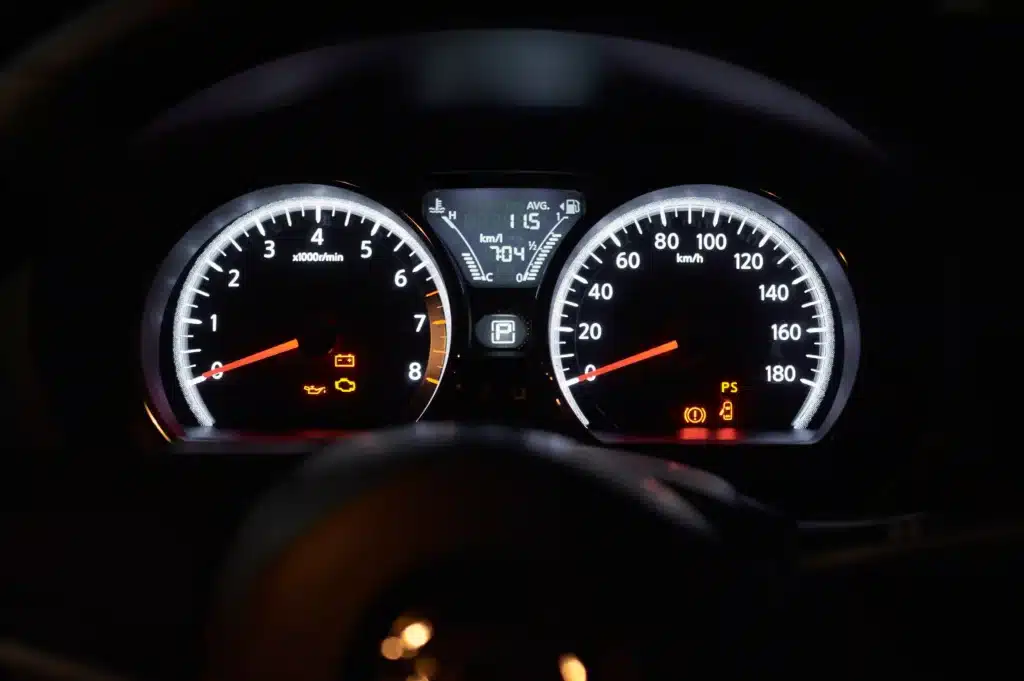
An orange AEB warning light comes on when the system is switched off, temporarily unavailable or has a fault.
Nissan’s Automatic Emergency Braking system relies on a front radar sensor, and on many newer models a camera at the top of the windshield, to monitor a car’s distance to what is ahead. Depending on the version, it watches for vehicles ahead and, with pedestrian detection, for people crossing in front of the car.
The AEB system then provides an obstacle warning to the driver. If the driver fails to respond in time (either by evading the obstacle or braking), then the emergency braking system hits the brakes. The vehicle will stop or decelerate, depending on the circumstances.
These safety systems were intended to prevent frontal collisions with vehicles and pedestrians. However, Nissan’s AEB allegedly malfunctions in ways that put drivers at an increased risk of getting rear-ended.
How Has Nissan Responded to AEB Problems?
For 2020 and newer models, Nissan has handled false braking through dealer bulletins rather than a safety recall. Those bulletins tell technicians to reprogram the driver-assist control unit when an owner reports false activation or unexpected braking on some Altima, Sentra, Frontier, Titan, Murano and Kicks vehicles, and the newest one, for the 2020 Altima, came out in January 2026.
Other bulletins deal with a front radar that shuts off, from blocked-sensor warnings on many 2020 to 2024 models to an April 2026 radar reprogram for some Pathfinder vehicles. Even so, NHTSA lists no recall or investigation on emergency braking for any 2020 or newer Nissan, as of October 2026, while owners have sent it more than 650 complaints about forward collision avoidance on those models.
A driver does not need a recall or a class action ruling to bring an individual lemon law claim in California. What decides an individual claim is the vehicle’s own repair history.
Is My Nissan a Lemon?
Your Nissan, equipped with Automatic Emergency Braking, may be a lemon if it shows the following problems:
- “Unavailable Front Radar Obstruction” or “Front Sensor Blocked” message on your dashboard
- Alerts or warnings of obstructions that are not there
- Unexpected vehicle deceleration
- Sudden and unexpected braking
- Sudden deactivation of Forward or Automatic Emergency Braking system
Recurring problems with automatic braking systems can make your vehicle unsafe to drive. If Nissan or one of its authorized repair shops can’t repair a warranty defect that substantially impairs your vehicle’s use, value or safety within a reasonable number of attempts, your vehicle may be a lemon.
The number of repair attempts considered “reasonable” can differ on a case-by-case basis. The specific problems with automatic braking systems will also vary depending on each consumer’s situation.
Consult a California lemon law attorney about your situation and legal rights. California’s lemon law, the Song-Beverly Consumer Warranty Act, can require a manufacturer to buy back or replace a car when it cannot fix a warranty defect within a reasonable number of attempts, and the buyer, not the manufacturer, chooses a repurchase over a replacement. Our California lemon law FAQ walks through how that works.
Your individual right to sue does not depend on any class deadline.
Nissan Kicks AEB and Forward Collision Warning Complaints
The Nissan Kicks has Forward Collision Warning and Automatic Emergency Braking, and the chief complaint from Kicks drivers is a malfunctioning front collision sensor. Its front radar watches for vehicles ahead, and a windshield camera adds pedestrian detection. When it misreads the road, the Kicks warns about obstacles that are not there, brakes on its own, or shuts the safety system off entirely.
Some 2022 and 2023 Kicks with false activation or unexpected braking can get a driver-assist control unit reprogram under a Nissan dealer bulletin. The owner accounts below come from reports Kicks drivers sent to NHTSA, the federal vehicle safety agency.
Kicks owners report false activations that dealers cannot trace. One 2021 Kicks owner said the car brakes for a head-on collision that is not there two or three times a week, and three dealer visits found nothing.
Other Kicks complaints describe false alerts and braking in completely ordinary conditions: entering a tunnel at roughly 45 miles per hour with nothing in the vehicle’s path, driving into low morning sun, moving through a parking garage, and running on cruise control on the highway. One 2020 Kicks owner counted at least six unprompted stops, some at 75 mph on the highway.
Kicks drivers also report the collision warning coming on at random in perfect weather, a warning that shuts off cruise control, and messages saying the system is unable to detect. Owners describe dealers finding no fault, saying the sensors are fine, or replacing a sensor only for the warning to return. One 2020 Kicks owner said the car had been in the shop more than five times for warning lights and sudden braking, with no fix, and the same front radar warning turns up across other Nissan models.
Where Is the Front Sensor on a Nissan Kicks?
The Kicks front radar sensor sits at the front of the vehicle, in the front bumper and emblem area, and models with pedestrian detection also use a camera at the top of the windshield. That location is why drivers are so often told the warning must be dirt, rain, snow or something blocking the bumper. If the bumper and emblem area is clean, the warnings keep coming in everyday driving, and the dealer keeps clearing codes instead of fixing the fault, keep every repair order, because the vehicle may qualify as a lemon.
Is There a Nissan AEB Class Action to Opt Out Of?
No. As of October 2026, the main Nissan AEB class action has closed, so no one has to opt out before taking an individual lemon law case against Nissan. An individual claim is decided on your own vehicle’s repair record, and the remedies available include a repurchase, a replacement vehicle or a cash settlement, depending on the facts of your case.
No class deadline applies to you, though California still has its own deadline to bring a lemon law case. An individual case can raise claims tied to your vehicle’s history. Contact a California lemon law attorney with questions about your own claim.
Lemon Law Help works only in California. We help California residents who bought or leased a defective model year 2020 or newer vehicle from a licensed California dealer. We cannot help people outside California, unless they are active-duty military.
If you decide to go ahead, we represent you at no cost and pursue cash compensation, a replacement or a buyback.
Reviewed by Roger Kirnos, Managing Attorney, California State Bar No. 283163
Do You Have A Lemon Vehicle?
"*" indicates required fields