
There is a specific pause that follows a Ford Fiesta shuddering away from a red light. The car bucks, the driver glances at the passenger, and neither says anything, because both already know exactly what it is. Ford Fiesta transmission problems have been public knowledge for so long that owning one of these cars means owning a defect half the internet can describe from memory.
Take the car to an independent shop and the diagnosis often arrives before the hood is open. The mechanic listens to six words, nods, and names the transmission from behind the counter. That is a strange kind of validation, and it does little for you when the shudder returns three weeks later.
Being right about the diagnosis turns out to be the easy part. Knowing exactly what is wrong does nothing at all to move the repair bill off your side of the counter.
How the Ford PowerShift Dry Clutch Behaves in Traffic
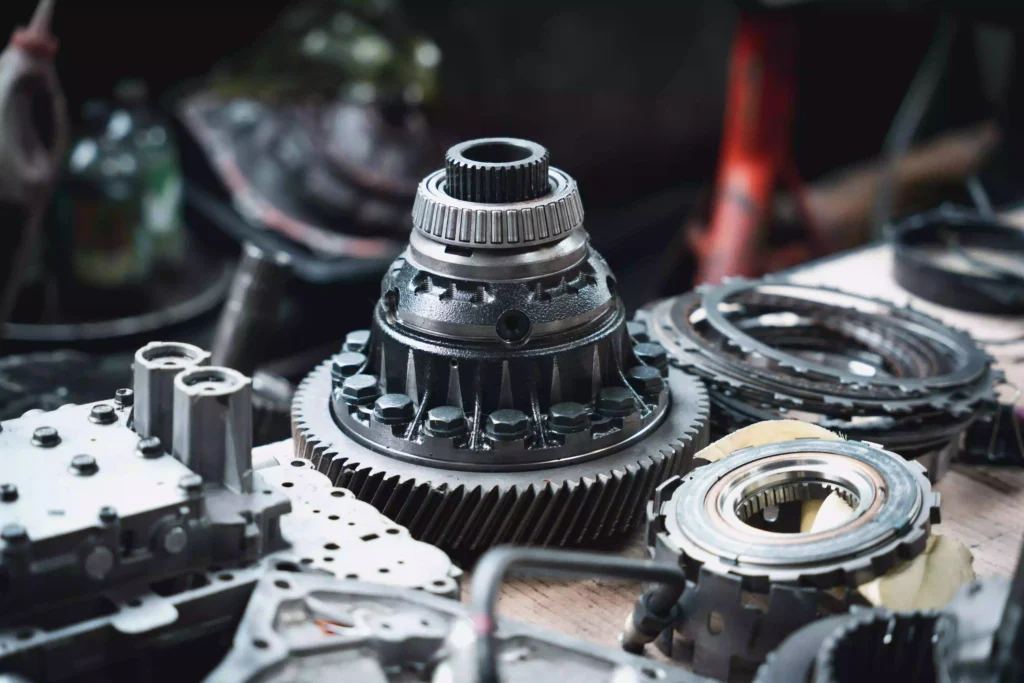
Ford built the DPS6 PowerShift to shift like an automatic while drinking fuel like a manual. Instead of a torque converter in fluid, it uses two clutch packs, one for the odd gears and one for the even ones, and both run dry. There is no oil bath in there to carry heat away or wash debris out.
A dry clutch is content at steady highway speed and miserable in traffic. Creeping forward at a light forces the clutch to slip, slipping generates heat, and the heat has nowhere to go inside a sealed case that is also collecting clutch dust. The driver feels that as judder pulling away from a stop, then a beat of hesitation, then a jolt when the gear finally grabs.
The second failure is contamination. Input shaft seals on these transmissions have a habit of weeping fluid onto friction material that was designed to stay clean, and once that happens the clutch surface glazes and grip stops being predictable. The control module answers by relearning its engagement points, which is why a car can feel repaired for a week after a software update and then go straight back to shuddering.
Almost everything owners describe about this gearbox traces back to those two mechanisms. Ford fitted the same unit to the Focus, so Ford Focus transmission problems read nearly word for word like the Fiesta reports: shudder from a stop, slipping between first and second, a long delay before reverse engages, and clutches worn out at mileages where no clutch should be.
Ford Fiesta Gearbox Problems at the Dealer and on the Used Lot
Ford published service bulletin after service bulletin about this transmission, telling dealers how to identify the shudder, when to replace seals and clutch packs, and how to reprogram the module afterward. That paper trail changes the texture of a service visit. Your dealer is not discovering your problem, your dealer is following a procedure written years before you drove in.
Ford went further than bulletins. In the summer of 2019 it stretched clutch hardware coverage out to seven years or one hundred thousand miles on a narrow band of Focus and Fiesta builds, with money back for anyone who had already paid for that work themselves. Earlier programs had already extended coverage for the control module and for the seals that leak onto the clutches.
Those programs had edges, and the edges were drawn by build date rather than by badge. The class settlement swept in a wider set of cars than the coverage extensions ever reached, and Ford went on selling the same transmission afterward. Owners of those later cars often meet a service adviser explaining that yes, this is the known problem, and no, your car is not covered for it.
The used market absorbed the story faster than Ford did. Shoppers researching a small Ford now find the transmission before the trim levels, resale prices for these cars sit at the bottom of their segment, and a shudder on the test drive ends most private sales on the spot. Our Ford lemon law page covers the brand’s other defect histories.
So the fame cuts both ways. It costs you money the day you try to sell the car, and it works in your favor the day you decide to make a warranty claim about it.
Why a Publicly Documented Ford Defect Helps a California Claim
The Song-Beverly Consumer Warranty Act decides a California claim like this one. It reaches a car still under warranty whose defect takes away enough of the use the owner paid for, and a gearbox that cannot be trusted to pull away from a light is squarely that. Ford also has to run out of chances to cure it, which is what a run of repeat visits over one shudder puts on the record.
Corroboration is the practical advantage a famous defect gives an owner. When a repair order names clutch shudder and the technician performed a procedure Ford itself wrote for that symptom, there is not much room left to suggest the owner imagined anything. Keep the visits written up as could not duplicate in the same stack as the rest of them, because intermittent behavior is a documented characteristic of this transmission rather than an excuse.
Owners reasonably ask where the lawsuits leave them. The class settlement for the earlier Fiesta and Focus cars was approved in 2020 and its claims window closed that same year, so there is nothing left to file into. Everyone outside it has had to bring a claim of their own.
An individual warranty claim is a different animal from a class case, because it turns on your vehicle and your repair history rather than a group outcome. A successful claim ends in a repurchase or a replacement, with the repurchase reduced by a mileage offset for the miles you put on the car before you first reported the defect.
The statute also shifts the buyer’s attorney fees onto a manufacturer that loses, which is why these claims are handled with nothing paid up front. Our California lemon law guide counts out how many repair chances the law gives a manufacturer and the rest of the standards a claim has to meet.
Most people reading this are in an older car, so start with the routes still open to you. Check your build date and your mileage against the extended clutch coverage described above, and dig out any receipt for clutch work you paid for yourself, because that program was written to hand some of that money back.
Then read whatever warranty came with your own purchase, particularly a certified used contract or a written promise from the lot that sold you the car. Written warranties are also backed by a federal statute, the Magnuson-Moss Warranty Act, which pays no attention to the model year printed on your door jamb.
The strongest California claims come from newer cars bought or leased from a licensed dealer here and still inside the original factory warranty. That is worth knowing before you spend an afternoon on the phone rather than after.
Public Knowledge Does Not Pay a PowerShift Repair Bill
Both cars left American showrooms years ago, so no new car on a Ford lot carries this gearbox. Buyers now read about the transmission before they read about the badge, and nobody is selling a dry dual clutch to a country that spends its mornings creeping along in traffic.
The less comfortable part of what it left behind is this. A defect can be acknowledged by the manufacturer, mapped out in its own service bulletins and litigated in public, and an individual owner can still be told at the counter that the repair is theirs to pay for. Public knowledge is not the same thing as coverage, and the space between those two is exactly where warranty law does its work.
That is the useful way to hold the history of this car. You do not have to prove this transmission is defective, because that argument was settled in public years ago. Find the warranty paper you actually hold, whether it came from Ford or from the dealer who sold you the car, and let Lemon Law Help tell you what it is still good for.
Reviewed by Roger Kirnos, Managing Attorney, California State Bar No. 283163.