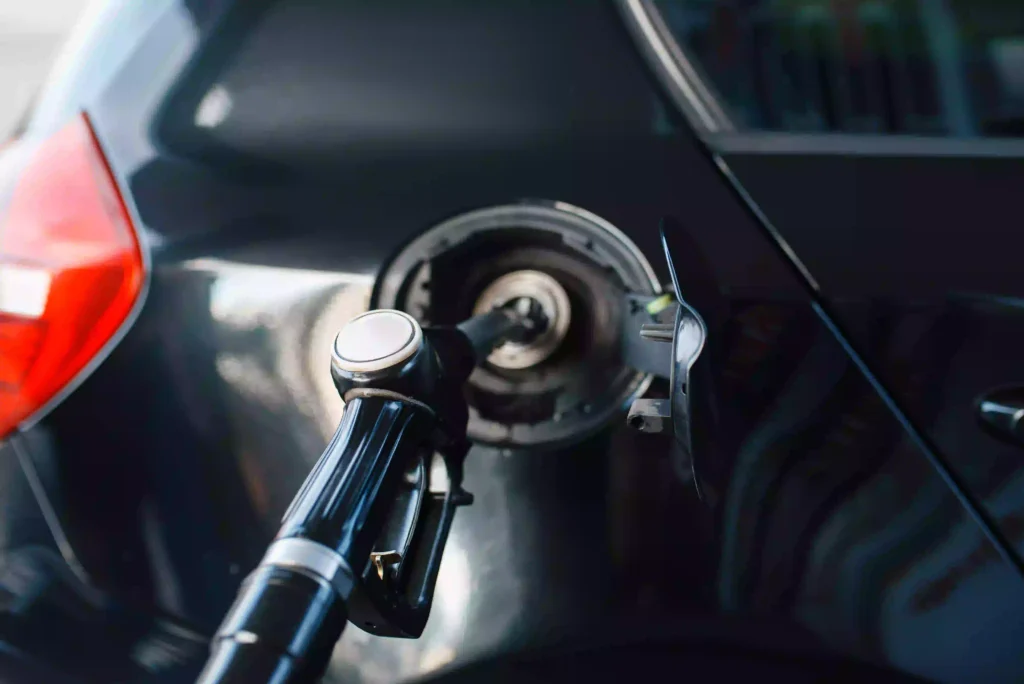

The first sign shows up in a closed garage before anybody has turned a key. An owner lifts the door in the morning and the air smells like a gas station, not faintly, and not the way a car smells right after a fill up. The Bronco Sport or the Escape has not moved since the night before, and the smell was not there last week.
Owners notice that before anything else, and a service desk waves it off faster than almost any other complaint. Ford itself lists a fuel odor, inside the vehicle and outside it, as a warning sign of the defect behind this recall. Your nose is catching something you may be told is nothing.
So it is worth following the fuel. Where it goes after an injector cracks explains why this recall keeps getting bigger, and why a smell you have reported more than once matters far more than it sounds.
Where the Fuel Goes When a Ford Injector Cracks
The high pressure injectors in the 1.5 liter three cylinder engine can develop cracks. Ford has pointed to corrosion as one contributing factor but has never published a full root cause, which is much of why this problem has stayed open for years.
When an injector cracks, fuel and fuel vapor escape into the cylinder head. From there the fuel runs out through a drain hole and down onto the exhaust and turbocharger, which are the hottest metal under the hood. Federal recall filings describe leak rates reaching roughly five gallons an hour.
Gasoline meeting hot metal is a fire waiting on the right temperature. Ford describes the outcome plainly as an underhood fire, in the engine compartment or under the body of the vehicle. It does not take highway speed, and a vehicle parked in a garage is not outside the risk.
That is why a gasoline smell around one of these SUVs is not a nuisance to live with. The smell is the leak announcing itself before the heat finds it.
Which Bronco Sport and Escape SUVs Carry the Risk
The recall reaches 2021 through 2024 Bronco Sport and 2020 through 2022 Escape SUVs built with that 1.5 liter turbocharged engine. Ford’s own filing puts the population just under 700,000 vehicles in this country, after the campaign was widened more than once.
There is a name problem worth clearing up here. The SUV involved is the Bronco Sport rather than the larger Bronco, because only the small three cylinder engine is affected. The Ford Escape fuel injector recall and the Bronco Sport campaign are one and the same, since both SUVs were built with that engine.
This action also replaced three earlier recalls over the same cracked injectors. If your SUV was already serviced under one of those, it is not finished with this one, which is the detail owners most often get wrong.
Enter your vehicle identification number in the federal recall lookup and read what comes back, including whether the listed repair is final.
Ford's Repair Was Never Meant to Replace the Injectors
Here is the detail Bronco Sport and Escape owners struggle most to accept. For most of the time this defect has been under recall, the repair on offer did not touch the cracked part.
The earlier fix added a tube to route leaking fuel out of the cylinder head and away from hot surfaces. Alongside it came engine control software that watches for a pressure drop in the fuel rail, and when it sees one it shuts off the high pressure fuel pump and pulls engine power down to cool anything that could ignite. The cracked injector stays in the engine.
Federal safety investigators said as much. The agency’s defect office concluded that the program did not address the root cause and did not call for replacing defective injectors before they failed. It also raised the question a drain tube invites, which is where the fuel ends up once it is routed away, including onto the pavement behind you.
Ford eventually agreed to replace the high pressure injectors and the fuel rail assembly instead of managing the leak, and the federal review of the remedy was closed in late 2025 on that basis. Ford pointed to the middle of 2026 for the follow up notices that go out when the parts repair is ready. That leaves the Ford fuel injector recall in an awkward place, a real fix identified and a long line of owners still driving on software.
The Fuel Leak Signs Your Nose and Eyes Catch First
Ford Bronco Sport fuel injector recall notices name a fuel odor first among the warning signs, before anything a scan tool would find. That puts the earliest evidence in your hands rather than a technician’s. Watch for any of these:
- A strong gasoline smell in the cabin or around the front of the vehicle
- That same smell sitting in a closed garage after the SUV has been parked overnight
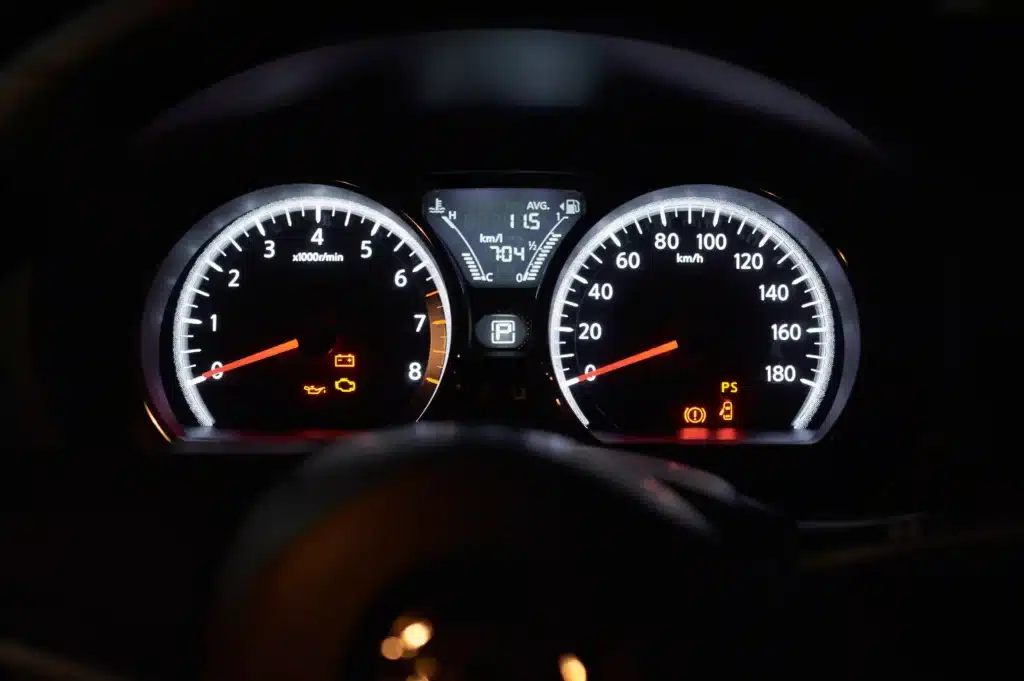
- A warning message in the instrument cluster, or a reduced power alert
- The engine dropping into a limited power mode on its own
- Damp spots or fuel residue on the engine cover or under the front of the SUV
- Smoke coming from the engine compartment or from under the body
The last item is not something to monitor. Ford’s guidance for a fuel smell or smoke is to park in a safe spot and call the dealer rather than keep driving.
Everything above the smoke is what owners report for months. Each visit becomes a line in your vehicle’s written history, whether or not the technician finds anything that day.
When a California Dealer Keeps Calling the Fuel Smell Normal
Owners in California run into the same loop. You report the odor, the dealer runs the software work or writes that nothing could be duplicated, and the smell returns in a few weeks.
This is the pattern the Song-Beverly Consumer Warranty Act, known to most drivers as the California lemon law, was designed to catch. The measure is whether a warranty defect does real damage to a vehicle’s usefulness, resale value or safety, and whether Ford has already used up a fair share of repair attempts. A leak that can put gasoline on a turbocharger clears the safety bar without help.
Two details catch fuel smell owners off guard. Keep a copy of every visit that ends in no fault found, because a smell nobody could reproduce is still a smell you reported on a dated document, and going through with the recall work does not undercut a claim either, since it adds one more entry to the same file. Our California lemon law guide explains the counting when a symptom keeps vanishing at the service drive.
An interim repair carries its own weight. When the manufacturer’s own paperwork describes the current work as something short of the final remedy, the defect you reported was managed rather than repaired. Our Ford lemon law page traces how that pattern has run across Ford’s recent campaigns.
If your SUV has been back more than once for the same fuel smell, Lemon Law Help is the second opinion the service desk cannot give you, and asking for it puts you on the hook for nothing.
Trust the Gasoline Smell Around Your Bronco Sport or Escape
There is a reason this post follows the fuel rather than the filings. Everything downstream of the leak, from the software patch to the long wait on a parts repair, started with owners smelling gasoline and being told it was normal.
A healthy engine does not produce that smell. If you can smell raw fuel around a Bronco Sport or an Escape, something is putting gasoline where it does not belong, and nothing said at the service desk changes what is landing on the metal.
Trust your nose over the reassurance. It noticed this defect before Ford named it, and it is still the most reliable instrument you have.
Reviewed by Roger Kirnos, Managing Attorney, California State Bar No. 283163.