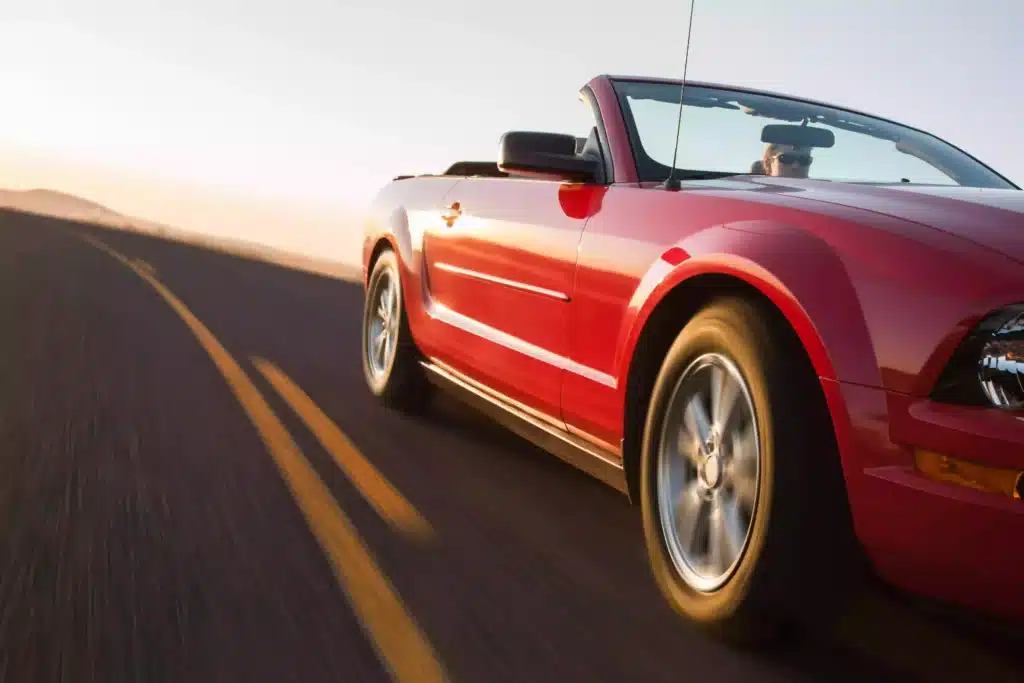

Nobody buys a Mustang thinking about the transmission. You buy it for the way it sits at a light and the sound it makes when the road finally opens up. The paperwork gets signed fast so you can go drive.
Then one morning the car does something you did not ask it to do. A shift lands like a shove, or you lift off the throttle and the car hunts and hesitates while you are already committed to a merge.
That moment changes the car. Nothing has broken in a way you can point at, but you are watching for it now, and a Mustang you have to brace against is not the car you went to the dealership to buy.
What Mustang Owners Report the 10-Speed Doing
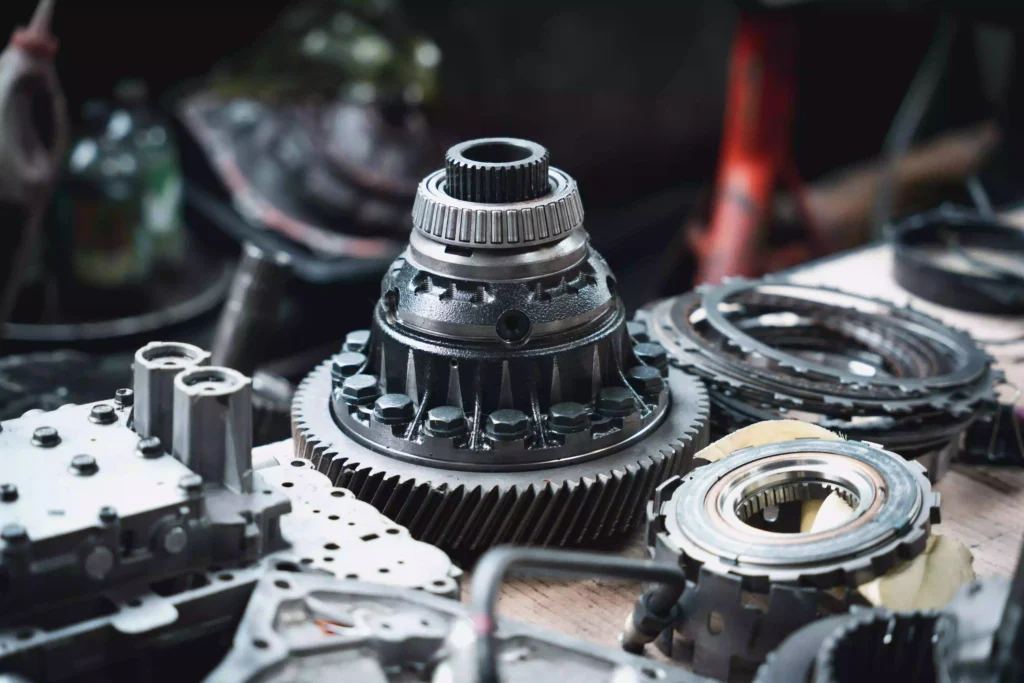
The unit in question is the 10R80, the 10-speed automatic Ford began putting behind Mustang engines with the 2018 model year. The same transmission carries the F-150, the Ranger, the Expedition and the Lincoln Navigator, which is why truck forum threads read so familiar to people driving a coupe.
Mustang transmission complaints filed with the National Highway Traffic Safety Administration are consistent about the low gears. Drivers describe the car jerking and jumping between first and third as though it cannot decide where it belongs, then settling once the car warms up and the first mile is behind them.
Higher in the range, the reports turn to hard shifts and hesitation. Owners write about a violent change of gear under acceleration, harsh shifting from fourth to fifth, and sudden losses of power at highway speed tied to an abrupt downshift.
Others put it the other way around, with the car doing nothing at all when asked for something. One owner reported the transmission failing to engage while pulling into an intersection, with the car crawling a few feet and then stopping. Another described creeping forward in stopped traffic with a foot planted on the brake pedal.
Ford Mustang transmission issues run further than harsh shifts, into stalling at a stop and a lurch into drive or reverse that owners compare to something coming loose underneath them. The specific symptom varies from car to car. What runs through all of it is a car behaving unpredictably at low speed and under load.
Why a Harsh Shift in a Mustang Is Not a Cosmetic Complaint
Service advisors sometimes treat rough shifting as a personality trait rather than a fault, something you get used to over a few thousand miles. That framing does not survive contact with what a hard shift is actually doing.
A shift that lands with a bang sends shock straight through the driveline. Owners of these cars have described the feeling as being hit from behind while sitting still, which tells you how much energy is arriving all at once. Repeated for years, that loading works on hardware that was never meant to absorb it.
The larger problem is predictability. A Mustang is a car people drive quickly and on purpose, and driving quickly on purpose depends on the car doing what you asked at the instant you asked it.
A downshift that arrives late, or a drop in power halfway up an on-ramp, takes away the one thing a performance car exists to provide, which is a confident answer to your right foot. That is a safety question. It is also the reason you chose this car over something sensible.
The Calibration Update Every Mustang Owner Gets First
Most owners who raise shift quality at the service desk are sent home with a calibration update. A technician plugs the car in, loads new transmission control software, and the shifts are supposed to smooth out.
Ford has published guidance to its dealers on exactly this, including a bulletin issued in the spring of 2023 covering harsh and delayed engagement on Mustangs built with this transmission. Some owners genuinely do drive away improved. Others report the old behavior back within weeks, and a second visit produces another update rather than a different answer.
There is a hardware side as well. Ford revised an internal clutch drum bushing later in production, so units built from late 2022 onward are not identical to the earlier ones. New software does not change the parts already sitting inside your car.
The next thing owners want to know is whether help is coming from somewhere else.
Is there a recall on the Ford Mustang 10-speed transmission?
No. Ford has issued no recall covering shift quality on the 10R80, and the software updates dealers load are handled as warranty work rather than as a campaign owners get a letter about.
Is there a Ford Mustang transmission settlement to sign up for?
No. The class action owners keep finding online has produced neither a settlement nor a claims process, and a California warranty claim never depended on one, because it is decided on your own car and your own repair history.
Enjoyment Is Part of What Ford Warranted on a Mustang
The value side of this is where a Mustang owner has the most room. Nothing in the Song-Beverly Consumer Warranty Act requires a defect the factory warranty covers to be dangerous before it counts against Ford. A car you paid a performance premium for and can no longer ask anything of has lost the thing it was priced on, and the statute takes that loss as seriously as it takes a risk of harm.
The difference matters on a car like this one. You are not required to produce a near miss on the freeway before your complaint counts as substantial, though plenty of these cars have supplied one anyway.
A Mustang is bought and priced for how it drives. When the drivetrain punishes acceleration and cannot be trusted in ordinary traffic, the car is failing at the specific thing it was sold to do, and that failure is neither imaginary nor small.
It shows up in plainer ways too. A transmission history sitting in the service records follows the car into whatever you can sell it for later, and the enjoyment you paid a premium for was part of what the warranty promised on day one.
The statute also weighs how many tries Ford has already had at the same complaint, and no fixed number of visits settles that. Two calibration updates for the same shift complaint and a car that still misbehaves is a pattern rather than bad luck.
Ford has two ways out of a claim it loses. It can buy the Mustang back at close to what you have put into it, with the driving you already got out of the car coming off that figure, or it can hand you another one. Because the statute bills a losing manufacturer for the owner’s legal fees, these cases run on contingency.
Our attorneys handle California Ford claims, and our California lemon law guide tracks how repair visits get tallied. Would you sign for this Mustang again, knowing how it shifts now? That is the question to bring to Lemon Law Help, and asking it carries no fee and no obligation to go any further.
What the Mustang Still Owes You
Think back to the deal you actually made at the dealership. You paid for a car that answers immediately and makes the drive home the best part of the day.
What some owners ended up with is a car they approach carefully. They plan around certain merges. They stop taking the long way for the fun of it.
A 10 speed Mustang was engineered to give a driver more gears and faster changes between them, and when it works, that is precisely what it delivers. When it does not, the difference between those two cars is not a matter of taste.
A warranty is a promise about the car you were sold, not about the car the factory managed to build that week. If yours has gone back for the same shift complaint more than once and still drives wrong, the question was never whether you are being picky about a fast car. It is whether Ford has any chances left.
Reviewed by Roger Kirnos, Managing Attorney, California State Bar No. 283163.