
The same computer module sits behind the dashboard of a Bronco, an F-150, a Transit van and a Lincoln Navigator. Ford has had to call more than a million of those vehicles back over what that module does to the rearview picture.
That module is why a black screen in reverse is not a private run of bad luck. One software flaw, copied onto a million vehicles, surfaces in a million driveways at roughly the same time.
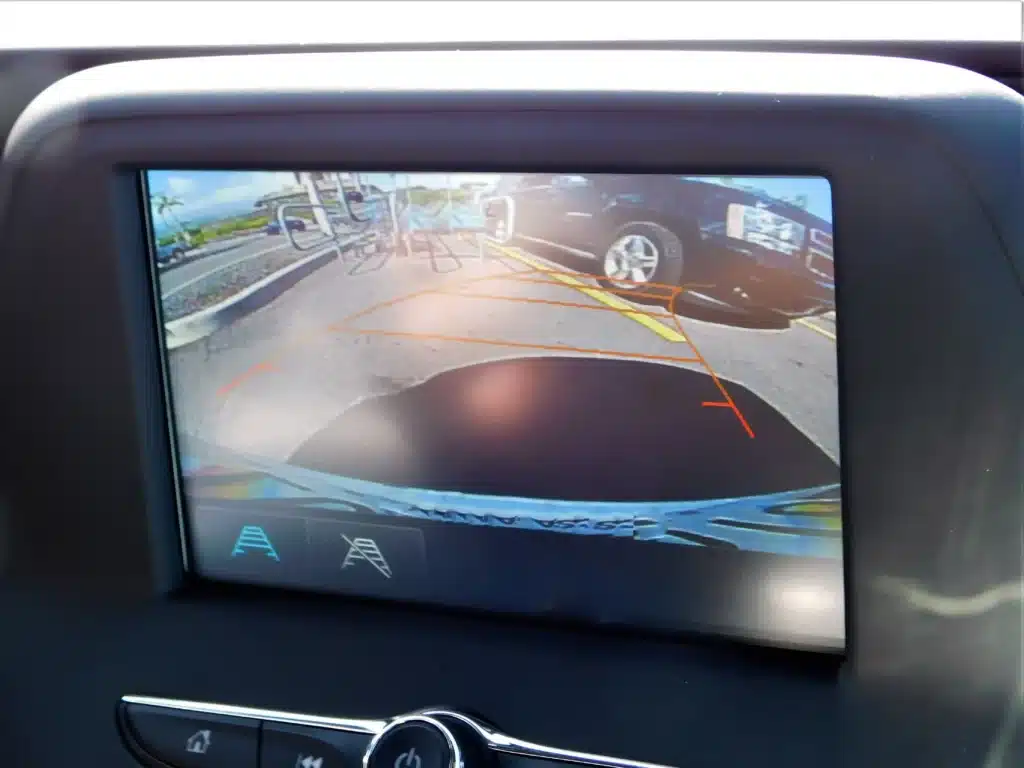
The failure does not even look the same twice. Some Ford and Lincoln owners get a black rectangle, some get a wash of blue, and some get the driveway they were sitting in thirty seconds ago, frozen and useless. The vehicle rolls backward regardless.
How Wide the Ford Backup Camera Recall Reaches
The campaign most owners ask about covers just over 1.07 million vehicles, which is where the round one million figure comes from. It reaches Ford and Lincoln models from the 2021 through 2025 model years.
The list runs across most of what Ford sells rather than one unlucky assembly line. Bronco, F-150, Edge, Escape, Expedition, Transit, Ranger, Mustang and the Mustang Mach-E all appear on it, along with the Super Duty trucks and the Lincoln Nautilus, Navigator and Corsair.
A free VIN check settles your own vehicle faster than any list, because coverage follows your build record and not whether the screen has misbehaved yet. The federal recall lookup at NHTSA will name every campaign currently open on your car.
Ford was not finished after that one. In March 2026 it called back roughly 1.74 million more vehicles under two further campaigns, one covering the Explorer, Escape, Aviator and Corsair, the other the Bronco and Edge. Another followed in the summer of 2026 for F-150 and Super Duty trucks whose rear view image can end up hidden behind the infotainment home screen.
What Fails Between a Ford Camera and Its Screen
Almost nothing goes wrong with the camera itself. The lens on your tailgate is usually still sending a picture, and the trouble sits in the module that receives it and paints it on the dashboard.
Ford calls that part the accessory protocol interface module, and it is the same box that runs SYNC. When operations inside its wireless software run out of order, the module resets itself without warning, and whatever was on the screen goes with it.
Timing is what turns a software bug into a safety defect. Ford said as much in its own recall filing: when the reset happens during a backing event, the rear-view image “may be frozen, missing, or delayed.”
The newer campaigns reach the same blank screen by other roads. In the Bronco and Edge that module sits close to the heating ducts and shuts down when it runs too hot, pulling the rearview image for as long as five minutes while it cools. In the Explorer and Escape group a startup pulse on the display circuit can flip the picture upside down, guidelines and buttons included.
Why a Software Flaw in a Million Fords Is Hard to Dismiss
Rear visibility systems became required equipment on new vehicles in 2018, so every one of these vehicles left the factory with a camera it was legally obliged to have. Ford then had to account for more than a million of them failing off one piece of software.
The same interface module sits behind the dash of a Transit making deliveries, an Expedition on a school run, and an F-150 easing a trailer down a boat ramp. One flaw in shared software therefore turns up across every kind of driving at the same time, in vehicles that have nothing else in common. A bad batch of parts never spreads that evenly.
That spread is worth something to you personally. One owner describing a screen that goes black now and then is easy for a service desk to write off as a quirk, while a fault Ford has already reported to federal regulators in more than a million vehicles is a pattern nobody at the counter can wave away.
The moment it happens decides how bad each instance is. A camera that is dead before you shift into reverse at least tells you what you are working with, while a module that resets partway through pulls the picture after the vehicle is already moving. Those seconds land in the middle of the maneuver rather than before it, where a driver has the least room to react.
The Software Fix, and the Screens That Went Dark Again
Every Ford rearview camera recall in this family ends in more or less the same two words: software update. For the largest one the remedy is a free update to that interface module, sent over the air or flashed at a dealership.
Ford began mailing interim notices in June 2025 and released the update in phases by model, and some vehicles were still waiting into early 2026. The upside down display has a software cure as well, and Ford began mailing letters in late June 2026 telling those owners it was finally ready to install.
An update changes how the module behaves, and that is the whole of what it can do. Software cannot make a hot module run cooler, and it cannot bring back a display that has already failed in your car.
That gap is why several of Ford’s camera campaigns during 2025 existed to correct repairs performed under earlier ones, and owners who had already given up a morning at the dealership opened a second letter about the same screen. In late 2024 federal regulators fined Ford 165 million dollars, the second largest penalty in the agency’s history, over how slowly it moved on an earlier camera recall.
Owners call it recall fatigue, and the phrase fits. Time spent waiting your turn in a phased software release is a cost no campaign letter ever accounts for.
What California Law Says When a Ford Camera Keeps Failing
Each of those campaigns gets you a free repair. None of them gets you a working camera, and those are two different promises.
California draws that line for you. The statute carries a mouthful of a name: Song-Beverly Consumer Warranty Act. What it wants to know about your Ford is narrow enough to answer in one sentence, which is whether the screen shows you the ground behind the tailgate when you shift into reverse.
Federal rules make a rearview camera required safety equipment rather than a convenience, so that part of the question is already settled. Ford sells these vehicles on their driver assistance features, and a blank display in reverse is that feature quitting at the one moment it exists for.
The record these repairs create tends to favor the owner. Because the remedy is a software flash, a service file often shows the same module reprogrammed two or three times for one complaint, sometimes under different campaign letters. Keep the paperwork from visits where the technician found nothing, since an intermittent screen rarely misbehaves on command.
Days off the road are counted on their own, apart from how many times you booked the vehicle in. If your truck has sat at the dealership for weeks waiting on a software phase or a backordered part, write the dates down, because a warranty repair that keeps a vehicle off the road past thirty cumulative days carries independent weight with California courts.
Owners who get that far can ask Ford to buy the vehicle back or replace it. What a buyback returns, taxes and registration included, gets broken down in our California lemon law guide, while the other defects we track on these vehicles sit on our Ford page.
The Ford Camera Is Only as Reliable as the Computer Behind It
Step back from the recall letters for a second and look at how the vehicle was actually built. The picture federal rules require in reverse is drawn by a computer that also handles your phone pairing, your radio and your navigation.
Consumer electronics restart, and everybody has made peace with that. On a phone a restart costs you a few seconds of irritation, while on a tailgate camera it costs you the only view of the ground your vehicle is rolling toward.
Remember that when a service advisor tells you the update went in and the matter is closed. Put a date on every dark screen from then on, and keep the service line it produced, however thin.
A second dark screen on the same vehicle is the entry that changes the case, and Lemon Law Help is who California owners call once it appears.
Software that reset once can reset again, and the only evidence that it stopped is a stretch of months in which nothing went dark. No recall letter promises you that stretch.
Reviewed by Roger Kirnos, Managing Attorney, California State Bar No. 283163.