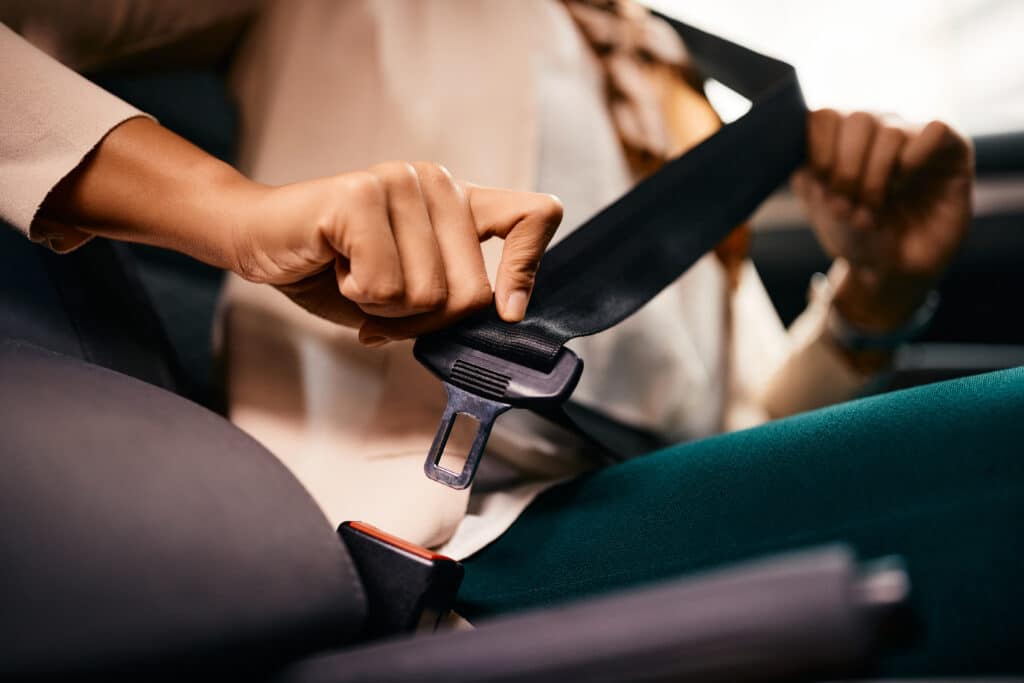

You buckle your seat belt without looking at it. Your hand finds the tongue, the buckle takes it, and the click happens somewhere below your line of sight while you are already watching traffic.
It is the one piece of safety equipment everyone in the car touches on every trip, and almost nobody thinks about it. Then a letter arrives with the words seat belt buckle printed on it, and suddenly you are staring at the part you never look at.
That is where a lot of Hyundai Palisade owners landed. Federal regulators spent more than a year going through the complaints, and the file closed only once Hyundai committed to replacing the parts. Here is what happened and what it means for your vehicle.
How the Hyundai Palisade Seat Belt Buckle Failed
The complaints kept describing the same unnerving thing. A belt that felt latched and then was not, a tongue that would not seat, a release button stuck in a recessed position. Several owners said the belt held for a while and then let go while the vehicle was moving.
Hyundai traced the fault to the buckle assembly rather than the belt or the retractor. Components inside it were built outside their specified dimensions, which created interference in the latch channel and added friction where the mechanism has to move freely. A buckle with that much drag can feel engaged when the latch has not seated, and cold weather made it worse.
The federal review opened in the summer of 2024 on a narrower slice of build years and grew as reports arrived. Hyundai extended the buckle warranty while the analysis was still running, then announced the Hyundai Palisade seat belt recall in September 2025 covering more than 568,000 vehicles from the 2020 through 2025 model years. Regulators closed their review that December with the recall standing as the answer.
The remedy is a physical parts swap, not a software update. Dealers replace the buckles in the front seats and the outer second-row seats at no charge, with the work released in waves across roughly a year. Coverage on those buckles now reaches one hundred fifty thousand miles or fifteen years, whichever arrives first, and it carries over to later owners.
Why Seat Belt Defects Get No Benefit of the Doubt
Almost every part on a vehicle is allowed a failure rate. A window motor that quits in one car out of a thousand is a warranty line item. A restraint gets no such allowance, because it has one job and one moment to do it.
Across more than half a million Palisades, the reported failures came to a fraction of a percent. That sounds reassuringly small until you notice the number means nothing from inside the car. The belt either holds in the second that matters or it does not, and no owner knows in advance which car is theirs.
This is why a belt complaint travels differently than a rattle or a leak. Regulators escalate faster, and a manufacturer will extend coverage before the engineering is finished rather than wait for a pattern to become undeniable. Nobody in that chain wants to be the one who priced a restraint failure as acceptable.
What a Closed File and a New Buckle Mean for Palisade Owners
Here is the honest read, and most of it is good news. A closed federal review is not regulators losing interest. It means the agency read the remedy Hyundai filed and accepted that it reached the defect, which left the inquiry with nothing further to chase.
If your buckles have already been replaced, you are in better shape than the owner of a vehicle with a quiet history. The suspect parts are out of your car, and the coverage riding on the new ones outlasts your original warranty by a wide margin.
If the work is still pending, the remedy reaches vehicles in stages, so a service department saying parts are not available yet is describing a schedule, not brushing you off. Ask the dealer to run your vehicle identification number against this campaign, since one call settles two things at once: whether your buckles are still on the list, and whether the extended coverage has attached to your vehicle.
No Hyundai Palisade seat belt class action exists, and that absence is not evidence the complaints went nowhere. It usually means the recall and the coverage extension arrived before a lawyer did, which is the outcome an owner would have picked anyway.
If Your Palisade Belt Still Fails After the Buckle Replacement
A new buckle that still misbehaves is not the trouble this recall was engineered to end. If a belt in your Palisade unlatches on the road or refuses to seat after the new parts went in, you are looking at a warranty repair that repaired nothing.
A new buckle is easy enough to test yourself, and it takes about a minute in the driveway:
- Reach for the buckle without looking, the way you always do, and listen for the click instead of feeling for it.
- Pull hard on the belt once it is latched, and do the outer second row seats as well as the front ones.
- Press the release and watch whether the button comes back out flush or stays sunk in the housing.
- Run through all of it again on a cold morning, since cold weather made the original buckles worse.
California takes that pattern seriously. The Song-Beverly Consumer Warranty Act supplies the standard, and a defect reaching occupant safety needs fewer failed attempts behind it than a nuisance would. Repeat visits for the same belt count toward that record, and so do the weeks the vehicle waits when a replacement buckle is not on the shelf.
A Hyundai Palisade lemon law claim turns on that service record rather than on the recall notice. What the path looks like in practice, from the repair history that qualifies through the buyback figures at the end, is laid out in the California lemon law guide, and our Hyundai page gathers what owners of this brand run into most. Owners tend to wait until the fourth or fifth failure before they call Lemon Law Help, and a restraint is the one part on the vehicle that rewards none of that patience.
None of this is meant to leave you nervous about a vehicle you probably like driving. It is meant to say that the click has earned the attention it never gets. It has to work exactly once, on a day nobody schedules, and the only version of that part worth having is the one that latches every time you reach for it without looking.
Reviewed by Roger Kirnos, Managing Attorney, California State Bar No. 283163.