
The road ahead is empty. Then the cluster flashes, the chime goes off, and the Jeep drops its nose hard enough to put your shoulder into the belt.
Nothing was there. The driver behind you had no warning either, and for a moment two vehicles are reacting to a hazard that never existed.
This is the half of the story nobody talks about, because a safety feature firing at the wrong moment still looks like a safety feature working. What it really does is teach you to stop believing it.
The Alerts That Fire With Nothing in Front of the Jeep
Owners of 2021 through 2024 Jeep Cherokee and Grand Cherokee vehicles describe the forward collision system going wrong in two opposite directions. It brakes and chimes for things that are not there, and it stays quiet when a car ahead actually stops short.
FCW on Jeep Grand Cherokee models runs off a forward facing camera and a radar sensor behind the grille, and the two have to agree about what is in the road. When one reads a manhole cover, an overpass shadow or low winter sun as an obstacle, the system does exactly what it was built to do about an obstacle.
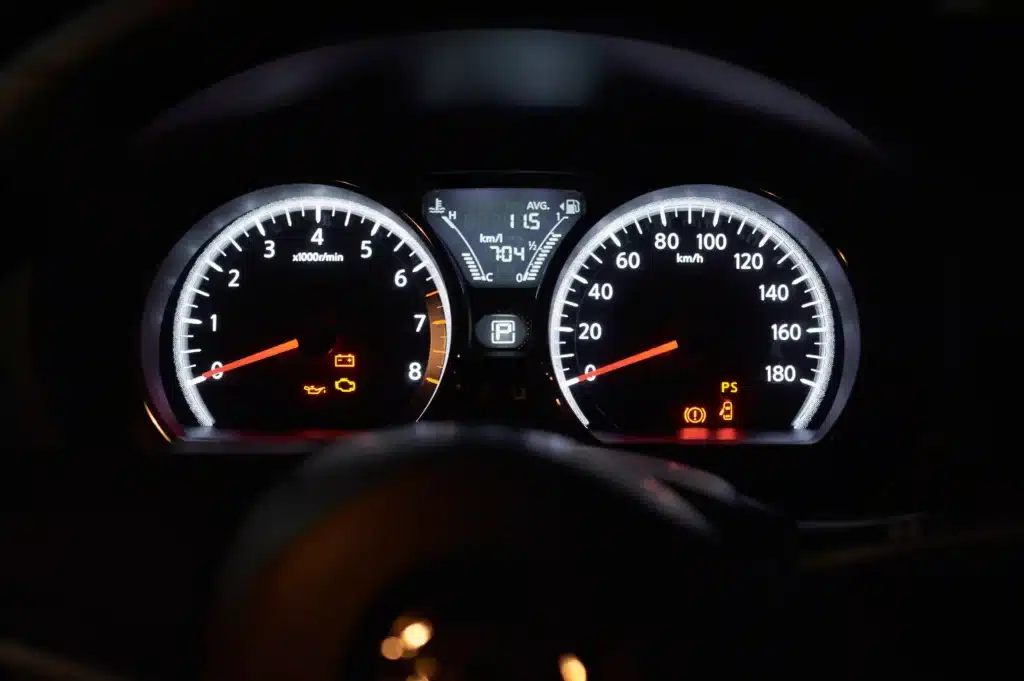
The other version of the fault shows up as a light. The FCW OFF warning Jeep drivers see stuck on the cluster means the system has taken itself offline, and owners report it returning days after a dealer cleared it. Two messages come up again and again, one reading FCW unavailable, service required, the other announcing an automatic emergency braking failure.
The accounts filed with federal regulators are specific. One driver crossing an empty four way intersection at about forty miles an hour reported the Grand Cherokee slamming its own brakes hard enough to throw both people forward into the belts, with no chime and no lamp beforehand. Other owners report the same grab on clear road often enough that it has become close to a daily event.
What Phantom Braking Costs a Jeep Driver in Traffic
Unrequested braking is not a nuisance the way a rattle is a nuisance. It is a deceleration nobody around you planned for, and the vehicle behind is closing on a bumper that just gave up thirty miles an hour. Owners who live with it stop using adaptive cruise and brace slightly every time the road throws a shadow across the lane.
The larger cost never reaches a repair order. A warning that has been wrong six times is a warning you stop reading, and the whole value of a collision alert sits in that instant of belief. A system with a record of crying wolf has already spent it.
Some owners solve the problem by switching the feature off in the vehicle menu, which is understandable and a bad trade. A Jeep forward collision warning off by choice is still a Jeep with no automatic emergency braking standing behind it, and that is not what anybody agreed to at the dealership.
Why the Reprogramming Rarely Stops a Jeep From Braking Itself
What most owners get at the service drive is software. A Jeep Grand Cherokee FCW complaint tends to leave with a reprogramming line on the invoice, sometimes with a camera recalibration or a check of the radar sensor alignment behind it. Plenty of owners then watch the same unprompted stops continue, which is how one bad morning turns into a file.
Some dealers will not road test the system, and that is not unreasonable. Provoking a fault that slams the brakes is dangerous, so the technician reads what the module stored instead, and the complaint you actually made can end up nowhere on the paperwork.
There is also no fleet wide fix waiting for you. These Cherokee and Grand Cherokee vehicles carry no recall covering forward collision warning or automatic emergency braking. The camera campaigns that do exist on them are rearview only, a separate system with a separate remedy, and none of them reaches what the forward sensors are doing.
No class action has ever been filed either. Complaints like these were looked into through early 2026 and no case came out of it, so there is nothing on file for you to join. For a California owner that matters less than it sounds, because an individual warranty claim runs on your own repair history and waits for nobody else to go first.
The Safety Test Cuts Both Ways for a Jeep Owner
The Song-Beverly Consumer Warranty Act turns on impairment, and that one word is what decides a claim like this. A braking system that acts on its own impairs a vehicle in two directions at once.
Most safety arguments about a car involve something that failed to act, such as a brake that does not hold or a warning that never sounds. This defect arrives from the opposite side, with the hazard being the system acting, without cause, in the middle of moving traffic.
Then there is the layer owners actually feel. Driver assistance only works while the driver still believes it, so a system that has been wrong repeatedly has removed the protection whether or not it fires again.
Value belongs to the same test. The active safety package was priced into the window sticker, and a feature you have learned to distrust is not what you paid for.
Three Calibrations Later, Where a California Jeep Owner Stands
Reasonable repair attempts is the other half of the standard, and the count is where these claims get decided. Two reprogrammings, a camera recalibration and a sensor replacement for one complaint is a repair history, not a run of bad luck.
Software is where most of that count comes from, and every flash on the invoice is another answer to the same complaint. By the time a third one has been loaded and the braking has not changed, the pattern stops being about any single visit.
Two habits protect that record while you are living it. Ask that the exact dashboard wording go onto the repair order rather than a summary of it, and if a dealer declines to road test the system, ask that the refusal be written down too.
Where all of it can land is Jeep buying the car back or replacing it. Our California lemon law guide answers what a manufacturer owes once a claim like this succeeds, and the rest of what we track on this brand sits on our Jeep page.
The Jeep Warning You Cannot Afford to Believe or Ignore
A collision warning system asks something unusual of a driver. It asks you to hand over a fraction of a second, before you have seen anything yourself, on the assumption that the car saw it first. That trade is fair while the system is right and impossible once it has been wrong on an empty road with your family in the back.
Nobody half believes a warning that gets a quarter of a second to matter.
So the driver adapts. You stop reacting to it, and on the day it finally has something true to say, you are a beat behind where the engineering assumed you would be.
How many times does a system get to be wrong before you are entitled to stop believing it? And once you have stopped, who should be carrying a Jeep that has used up its own answers?
If your Jeep keeps going back for phantom braking or a collision alert that will not behave, make the call before you authorize another reprogramming. What one more flash is worth to your record depends on what the last three already said, and Lemon Law Help takes these claims for California owners.
Reviewed by Roger Kirnos, Managing Attorney, California State Bar No. 283163.