
The first warning is almost always a sound. A knock at cold start, a rattle that rises with the engine, a vibration through the seat that was not there a month ago in a Rogue or a QX50 that still looks new.
The noise is only the opening, and owners describe what comes next the same way over and over. The dealer keeps the car, the service advisor mentions debris in the oil pan, and a vehicle you are still making payments on needs a whole new engine.
If that is where you are, it helps to know this failure has a shape, and that Nissan has now acknowledged it twice in writing.
Both halves of that shape are worth knowing, how one of these engines dies and how the records created along the way become a California warranty claim.
The Sounds a Failing Nissan VC-Turbo Engine Makes First
Nissan engine problems in these vehicles rarely arrive all at once. They begin as noise, and noise is easy to explain away for a while.
Owners report knocking and rattling from the engine compartment, a shake or a jerk under acceleration, and a rough idle that smooths out once warm. Complaints tend to arrive in that order, sound first and power second.
Stalling at a light, hesitation on an on-ramp, and a car that stops pulling while you merge come later in the same story. The 1.5 liter three cylinder draws the loudest complaints, and the 2.0 liter four cylinder found in Infiniti models produces the same reports.
Rogue drivers often notice something else first: a smell of raw fuel in the cabin and in the garage. That is oil dilution, where fuel slips past the piston rings into the oil, and it matters because diluted oil stops protecting the parts that fail next.
No recall covers that smell. Dealers work from a service bulletin instead, ruling out leaks and then replacing a hose in the crankcase ventilation system. If your Nissan Juke smells of fuel, that points to a different problem entirely, because the Juke never carried this engine.
Early on the symptoms come and go, so a first dealer visit can end with nothing found and nothing fixed.
What a Nissan Dealer Finds in the Oil Pan
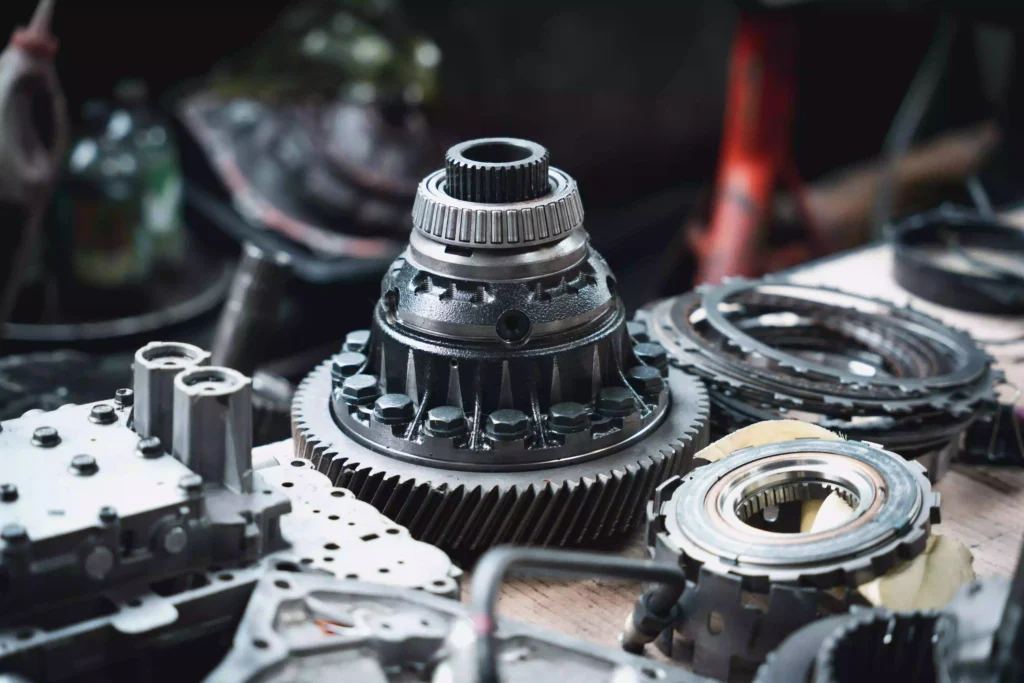
The VC-Turbo is not built like a normal engine. Instead of a connecting rod tying each piston to the crankshaft, it uses a multi-link assembly and an actuator motor that change the compression ratio as you drive. That design puts more bearings and links under load, including the lower link Nissan calls the L-link.
When lubrication falls off, those bearings give out. Nissan has traced it to a manufacturing defect in the bearings on earlier engines and to elevated oil temperatures on later ones. Either way the result reads the same: metal wears off and lands in the pan.
So the inspection every owner gets is an oil pan inspection. A technician who finds debris is looking at an engine replacement rather than a repair, because those shavings have already been everywhere.
There is no longer a single campaign to point at. Nissan has answered this failure in two separate actions, one filed in 2025 and an expansion in 2026.
The first reached 443,899 vehicles across the Rogue, Altima, QX50 and QX55, all built with either the 1.5 liter three cylinder or the 2.0 liter four cylinder. The expansion pulled in more than three hundred thousand additional Rogue SUVs, this time because higher oil temperatures can thin the oil until a bearing seizes. Nissan has said a seized bearing can breach the block and release hot oil, which is where the fire risk comes from.
Whatever the letter on your kitchen table calls it, the remedy runs the same way. Dealers reprogram the engine control module, read stored trouble codes, road test the car and inspect the pan, replacing the engine at no charge where debris turns up.
Ask your service advisor whether the car is inside the Nissan VC-Turbo recall, and confirm it with the free VIN lookup at NHTSA. Eligibility follows build records rather than symptoms, and the vehicles at issue run from the 2019 model year, when this engine first reached buyers, through 2025. Our page on Nissan defects tracks the rest of what we see on these cars.
What Your Nissan Repair Orders Are Actually Recording
What decides outcomes happens at a service counter, not in a courtroom. Every visit produces a document worth more to you than to the dealership.
The paperwork from an oil pan inspection matters longer than the inspection does. A line reading “could not duplicate” is still a dated record that you brought the car in over the same defect. Check the wording too, because engine knocking written up as a customer complaint of noise is a weaker version of the same visit.
Days the car sits at the dealership waiting on an engine count separately from repair attempts, and almost nobody thinks to total them.
These are the papers worth keeping together in one folder:
- Every repair order, from the first noise complaint to the last inspection
- The recall notice Nissan or Infiniti mailed you, and any goodwill letter
- Receipts for anything you paid out of pocket, especially engine or oil work
- Your purchase or lease contract and the warranty booklet
- A dated note for each episode: what the car did, where, and how fast you were going
- Rental and loaner paperwork, which proves how long you went without the car
Your warranty position matters more than the year printed on the title. These vehicles carry a powertrain warranty of five years or 60,000 miles, and what counts is usually whether the defect was reported while that coverage was live.
That is why the oldest repair order in that folder is often the most valuable paper you own. Coverage that has since expired does not erase the Nissan engine issues you reported before it ran out.
What California Warranty Law Does for a Nissan Owner
The law that decides this is the one everyone calls the California lemon law. It carries the name Song-Beverly Consumer Warranty Act, and its test is whether a defect the warranty covers substantially impairs the vehicle in use, in value or in safety, and whether Nissan has been given enough chances to put it right.
An engine that seizes, stalls in traffic or comes apart internally is not a close call under that standard. Time counts on its own too, since more than thirty cumulative days out of service for warranty repair is the kind of showing the statute gives real weight.
Owners who reach that point are entitled to a replacement vehicle or a repurchase. The repurchase side returns the price you paid and the costs that came with it, less a deduction for the good miles you drove before any of this started.
The class action filings over these engines are still allegations rather than findings. A Nissan VC-Turbo engine lawsuit brought on behalf of a group can crawl along for years, and none of those cases has yet paid an owner anything.
An individual Nissan VC-Turbo engine defect lawsuit works on a different footing. It is your vehicle, your repair history and your warranty, decided on your own facts, with no class waiting to be certified.
Completing the recall does not weaken your position; it adds a documented repair to it. Work done free under warranty counts the same as work you paid for, and skipping the free inspection to protect a future claim has the logic backwards.
The case is handled on contingency, and under Song-Beverly the manufacturer pays attorney fees and costs when the owner prevails.
How Long a Nissan Engine Claim Takes From Start to Finish
Owners ask what filing actually involves before they ask what it pays. The first stretch is paperwork, spent pulling your repair orders, the recall letter, the purchase contract and any receipts you covered yourself.
That part moves as fast as you can find the documents. The next part does not. A demand goes to Nissan, manufacturers take weeks to answer on a defect this widespread, and the first answer is rarely the last word.
Most of these claims settle from there, without anybody standing in front of a judge. Owners who get that far tend to count the wait in months, and a manufacturer that decides to dig in can stretch it well past that.
You keep driving the vehicle through all of it, and filing changes nothing about the coverage already on the car. Our California lemon law guide goes further into the mileage deduction and the documents a claim runs on, and a free review by Lemon Law Help will show whether your service history opens one.
Reviewed by Roger Kirnos, Managing Attorney, California State Bar No. 283163.