If your Ford F-150 keeps going back to the dealership for the same rattle, the same harsh shift or the same warning light, you are not imagining it. The Ford F-150 is the best-selling pickup in the United States, and that volume comes with thousands of owner complaints filed with the National Highway Traffic Safety Administration across the 2018, 2019 and 2023 model years alike. Volume does not guarantee that any given truck was “built Ford tough.”
The problems Ford F-150 owners report most often are:
- Abnormal rattling sound
- Delayed shifting
- Sudden lurching
- Faulty cam phasers
- Excessive oil consumption
- Engine knocking
- Tailgate falling
- Instrument cluster going blank
- Back-up camera freezing
If you experience any of these problems, look for these telltale signs of a lemon: your vehicle has landed in the shop multiple times, or it was stuck in the shop for at least 30 days all added up, and your problems have still not been resolved by your local dealership.
Table of Contents
Ford F-150 Engine Problems
According to the National Highway Traffic Safety Administration, the most common Ford F-150 engine complaints are abnormal ticking or knocking noises, low oil levels, Auto Start-Stop problems, fluid leaks, issues with cam phasers and vehicle stalling. Owners of 2018 and 2019 F-150 trucks file these complaints most often, and drivers of much newer trucks describe the same cold-start rattle.
One complaint described the cam phaser issue: “Unknown cam position sensor throwing code P0345. Replaced part, a week later came back. Alternator battery and starter tested fine. Started rattling a week later.” Another complaint states: “The vehicle has given codes P0018 and P0021 on multiple occasions. These codes are likely due to an issue with the cam phasers. This is a known issue due to a design flaw.”
Some Ford F-150 engine problems are reportedly caused by the variable valve timing (VVT) solenoid.
“Failed camshaft phasers and VVT solenoids. Mechanic shop has confirmed the problem and has said this is far from the first failure they have seen with Ford trucks and these parts. No warning lights to indicate the problem to the driver. Will lead to major engine failure.”
– October 3, 2023, CarComplaints.com
“The variable camshaft timing (VCT) solenoid becomes gummed up, causing the engine to lag. Specifically after driving on the interstate or highway and then sitting at a red light. The VCT does not perform properly and the engine idle drops, causing the truck to stall and die at the light. Online forums show this to be a common problem for the past couple generations of this Ford 5.0 L motor and always seems to occur between 80,000 and 100,000 miles.”
– February 14, 2024, NHTSA ID: 11571797
A class action lawsuit alleges that Ford’s 5-L “Coyote” engines are susceptible to excessive oil consumption, engine rattling, vehicle stalling, and other consequences of frequent low oil levels. The claims cover 2018 to 2020 Ford F-150 trucks, where oil is allegedly allowed to bypass into the combustion chamber and burn off instead of lubricating the engine. Owners describe adding roughly a quart of oil every thousand miles, poor lubrication, premature engine wear and, in the worst cases, engine failure.
That litigation is still open. The most recent complaint, Bryan v. Ford Motor Company, was filed in the U.S. District Court for the Eastern District of Michigan on August 31, 2025 for owners of 2018 to 2020 F-150 trucks with the 5.0-liter engine, and as of August 2026 no nationwide settlement has been approved. A class action is not your only route, and for a truck that keeps failing it is rarely the fastest one.
A complaint regarding oil consumption states the following about a 2019 Ford F-150:
“Truck uses an excessive amount of oil that would not be corrected by Ford. Due to this issue the truck failed to operate normally. It stalled in the middle of an incredibly busy intersection, causing traffic back up as well as increasing safety concerns for the driver of the truck as well as other drivers on the road. This has happened multiple times. Ford is aware of the engine oil consumption issue. Has expressed multiple times that it was not a problem. Attempted to fix by selling a new longer dip stick to attempt to hide the problem with excessive oil consumption.”
– December 3, 2023, NHTSA ID: 11558163
Ford F-150 Transmission Problems
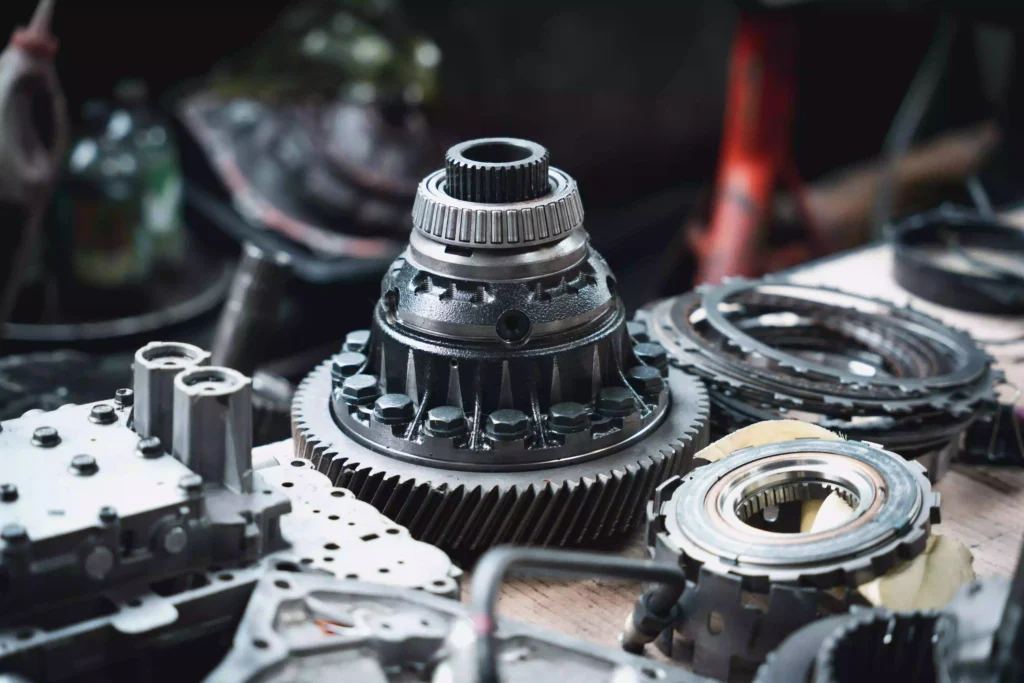
Ford F-150 pickups have shipped with both a 6-speed and a 10-speed automatic transmission. Trucks with a 2.7-L, 5-L or 3.5-L gas engine or a 3-L diesel engine most often came with the 10-speed automatic, while the 3.3-L base engine was paired with the 6-speed. Common transmission problems reported in the Ford F-150 include delayed shifting, grinding, difficulty in shifting gears, engine revving, lurching, a hard clunk on start-up and outright transmission failure.
Ford’s 10R80 transmissions have come under legal scrutiny for these notable transmission problems. Class action complaints covering the 10R80 in 2017 and newer F-150 trucks describe whiplash, clunking while starting the engine, harsh and erratic shifting, jerking or lunging, hesitation between gears and loss of power, which the plaintiffs call “life threatening.” As of August 2026 no nationwide settlement of that litigation has been approved. If your truck comes with the 10-speed transmission, you may recognize some issues found in the complaints below. However, the 6-speed transmission isn’t off the hook.
The 10-speed has also drawn a safety recall of its own. In October 2025 Ford filed NHTSA recall 25E070, covering roughly 34,481 remanufactured 10R80 transmissions installed as warranty replacements in 2017 to 2021 Ford and Lincoln vehicles, after a missing T10 bearing was found to let a truck roll away when the driver believed it was in Park.
“Transmission will not shift correctly between gears. When you first shift from start up it will make a hard clunk noise. Truck will start jumping and once it’s done the wrench light comes on. At one point I couldn’t get it to go into reverse and I had to shut the truck off and restart it to get it into reverse.”
– July 26, 2023, NHTSA ID: 11534661
“Between 3 and 4 gears on a 10 speed transmission. Accelerating on a cold start or going up a hill after start. Has a lunging gear shift and hard shift then after and catching the correct gear. Have taken the truck multiple times to ford. All they do is just reset the transmission. I’ve had issues with the rentals they give me of the same vehicle. New issue is between 7-3 when braking hard from 60+. Vehicle lunges forward and can hear transmission grinding and having issues switching gears thereafter.”
– July 24, 2023, NHTSA ID: 11534105
“Transmission bucks and skips gears in the 800-2000 rpm range. When acceleration is applied in the rpm range given, it hesitates and then lurches forward . It also ‘jumps’ in a forward motion when starting in park on a level surface. I had the transmission software flashed by Ford last year which helped for 2-3 months only. It is getting worse. Ford now wants to charge to refresh the software again since the truck is out of warranty by 6 months.”
– May 31, 2023, NHTSA ID: 11524749
Ford F-150 Electrical Malfunctions
The most prominent electrical complaints on the Ford F-150 report issues with the Auto Start-Stop function. Essentially, the Auto Start-Stop feature will shut off the engine when the brake pedal is depressed. Once the driver lifts the foot off the brake pedal, the engine automatically restarts. Ideally, this system would lower truck emissions. However, complaints report that this repeated starting and stopping of the engine is hard on the battery and alternator.
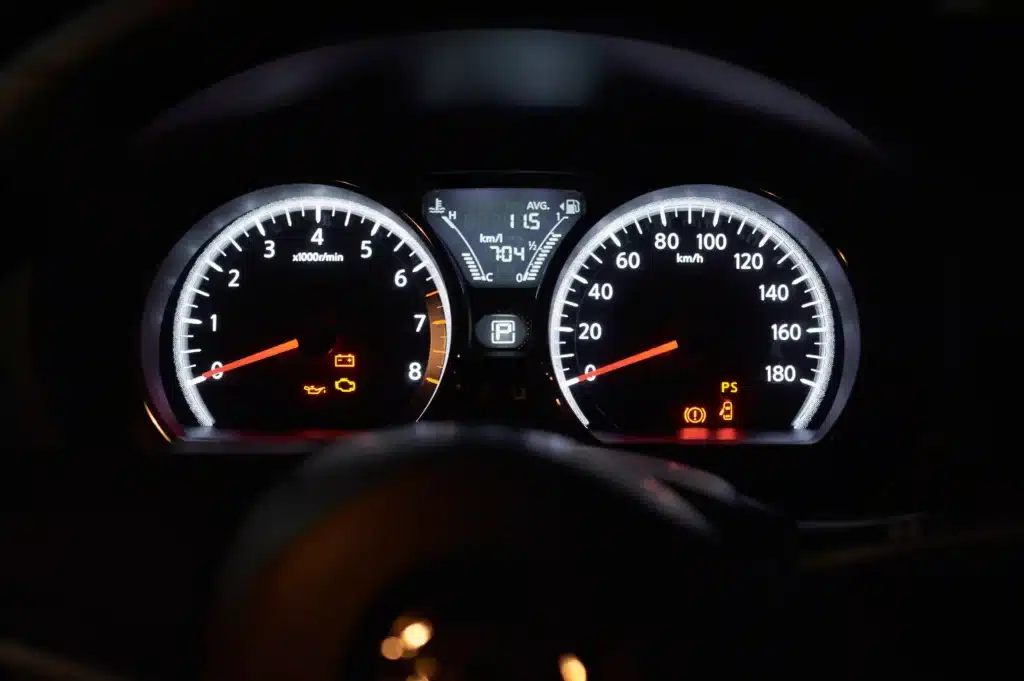
Newer trucks trade that complaint for a different one. Owners of 2023 Ford F-150 trucks report the instrument cluster going blank, air conditioner lines freezing, air failing to blow through the vents while the fans are running, and the back-up camera screen freezing or going dark. When the cluster goes blank the driver can no longer see vehicle speed or braking information. When the camera freezes the hazard is quieter: one owner warned that “you are seeing a camera image that is not related to the actual view behind you,” and another described backing out of a parking space on a frozen image that only cleared after shutting the engine off and restarting it.
Some 2023 F-150 trucks, particularly those with the PowerBoost hybrid powertrain, show “Full Accessory Power Active” or “Stop Safely Now” on the instrument cluster and then refuse to start or shift into gear. Owners report trying to restart the truck repeatedly, and some say they had to leave it overnight before it would run again.
“Beginning 3 months ago, intermittently during in-town traffic driving, the vehicle will shut off. It happened about once a month. Three weeks ago when it did this, it said Low Charging System, so I took it to the dealer where I purchased it. The Alternator tested Low, so it was replaced. Two weeks later, it died at a stoplight again & at Idle, then the Dash Message said Disengage Auto-Shut Off and Restart Engine. I called the dealer where purchased it & they came and got it. They tested it for a couple days & also had several people drive it, and they said it did fine with the Auto-Shut Off Turned On. Well this afternoon I drove it local around my own town, and it still runs rough. It idles rough and is acting like it wants to die again at stoplights. The only way to be comfortable driving it is with the Auto-Shut-Off Disabled. In traffic at a red light that turns green, and if you’re stalled out, it’s going to cause a rear-end collision. Not to mention it’s hard on the battery and alternator having to keep restarting at intermittent intervals in traffic. The dealer said they drove it around their lot area, however, it doesn’t do it unless they drive it for 45 minutes or an hour. When discussing this with 3 area Ford Dealers, they all said it’s going to be hard to find. There’s no Check Engine Light or any sort of Code that can be used. They also stated it’s probably something small causing it. One specific dealer stated that something else is causing this issue, and until that is found and fixed, it’s going to keep doing it. The dealer that’s been handling this and purchased from, did a Factory Reset on the PCM.”
– June 9, 2023, NHTSA ID: 11526287
Other electrical issues have prompted multiple Ford F-150 recalls. Whatever model year you drive, use NHTSA’s recall search function to check if you are part of the following:
- Rearview Camera: Rearview cameras may display a blank or distorted image due to a poor electrical connection.
- Daytime Running Lights: This recall applies to F-150 trucks with high series LED headlamps with Autolamp (on/off). When the driver manually switches from Autolamps to “Headlamps on,” the Daytime Running Lamps may not dim to parking lamps as intended.
- Instrument Panel Displays Don’t Work: Excessive sealant adhesive on the positive battery cable, Battery Monitoring System or Power Distribution Box joints could cause malfunctions in instrument panel displays, braking or steering assist. This issue could also cause engine stalling.
- Engine Block Heater: Two recalls have been issued due to the engine block heater cable’s splice connector experiencing corrosion and damage. Corrosion and damage could cause resistive shorts, which can overheat or melt the wiring.
Not all affected trucks were included in these recalls, even if they needed to be. In some cases, resistive shorts have led to F-150 trucks catching on fire.
“After being parked for over 6 hours, the truck spontaneously started to smoke, sparked, and caught fire at 12:53 am. This ignition was inside the engine compartment on the passenger side. All was recorded on 24hr video monitoring and my truck was in stock condition without any aftermarket parts and no warning lights on. Incidentally my truck had just been routinely serviced with the past month by the dealership and all was fine. Within minutes the truck was engulfed in flames, my neighbors and I attempted to extinguish the flames until the fire company arrived within 6 minutes. Within this short less than 15 minute window the entire engine and cab was destroyed. If this truck was parked in a garage this incident would have been catastrophic. Luckily no one was injured and the prompt response of my neighbors and the fire company prevented this from catching my home on fire. The police and fire company reviewed the video and informed me to notify any safety board and The Ford company directly. In review this problem is not new and well document in the past. There are recalls in place for the same make and model vehicles with the same fire starting in the front passenger side. Unfortunately my VIN was not included in this recall.”
– June 14, 2023, NHTSA ID: 11526923
Ford F-150 Brake Problems
The Ford master brake cylinder lawsuit alleges that F-150 trucks equipped with a 2.7-L, 3.5-L, 5-L, or other engine with a Hitachi step-bore master cylinder may be at risk of losing braking ability with little warning. A defective front brake master cylinder allows brake fluid to leak into the brake booster and bypass or recirculate internally. This causes a loss of hydraulic brake pressure. That means when the driver depresses the brake pedal, it takes longer for the truck to stop.
Here is where that litigation actually stands. The Klepac v. Ford Motor Company complaint, filed in March 2023 in the U.S. District Court for the Eastern District of Michigan, covers 2019 F-150 trucks along with 2015 to 2019 Expedition and Navigator SUVs. An earlier master cylinder case covering 2013 to 2018 F-150 trucks, Weidman v. Ford Motor Company, ended on November 6, 2024 when the parties stipulated to dismissal with prejudice, so owners of those earlier trucks have no class case left to join. As of August 2026 no class settlement has been announced for any of these trucks, which is why an individual California claim matters more here than a class notice.
A few complaints have reported leaking brake fluid and loss of braking power.
“I was driving approximately 35 mph. I braked hard enough to slow down to avoid hitting a car that blew through an intersection. That’s when my brakes became soft, and the brake pedal went all the way to the floor. The truck had limited braking at that point. I was able to continue driving for a bit. The brakes would initially have some braking power when I first applied the brake, but within seconds the brake pedal would go all the way to the floor again. After braking several more times, the low brake fluid message came on. I opened the hood, and you can see fluid has leaked on the passenger side near the firewall.”
– December 1, 2022, NHTSA ID: 11495716
“My wife was driving my truck while I was hospitalized after emergency surgery. While driving, an emergency noise sounded and a “Brake Fluid Low” light came on. Immediately after that, the truck was difficult to stop – having to put the pedal all the way to the floor. She immediately went to a local full service gas station to have some brake fluid put in. She was told there that there was brake fluid all over the engine under the hood and that the brake hose was busted. They topped off the brake fluid and followed her home, one mile away, where she parked the truck (said she was scared driving and several times was unable to come to a complete stop – luckily no one hit her!). Upon getting out of the hospital, I called the dealership where I purchased the truck and an extended warranty that I pay $75-$100/ month for. I was told I was responsible for getting the truck to them (in another town 15 miles away) and that most likely it would be covered under my warranty. I contacted my insurance company and filed an Emergency Roadside claim to have the truck towed to the dealership since it was undriveable. I’ve just received a call from the dealership. They say my brake line is not covered because it’s not a mechanical failure. They say the hose came loose and rubbed against the steering column and because of that, the warranty did not cover the brakes. They said I might have gone off-roading (which I didn’t). I am self-employed and use my truck daily.”
– January 13, 2023. NHTSA ID: 11501619
Ford F-150 Recalls and Lawsuits
Ford has issued dozens of F-150 recalls and they group by system. Check your VIN against NHTSA’s recall search before you assume a repair bill is yours to pay. Recalls tell you what Ford already admits; the lawsuits below tell you what it has not admitted yet. Neither one replaces a lemon law claim.
Ford F-150 Transmission Recalls
Three separate recalls cover trucks that will not reliably stay in the gear the driver selected. Certain 2018 Ford F-150 trucks with 3.3-L engines, a 6-speed transmission and a column mounted shift lever may not detect which gear is supposed to be selected when the lever is moved from Park to Drive, so the powertrain control module can mistakenly select Neutral or Reverse. Certain 2018 trucks with 10-speed transmissions have a gear shift cable clip that can become unseated or dislodged, which lets the transmission appear to be in PARK when it is actually in another gear and creates a rollaway risk. A third recall covers 2018 trucks with 10-speed transmissions that lost the PARK function because a roll pin was never installed in the transmission.
Ford F-150 Engine Recalls
F-150 trucks with 3.5-L engines were recalled for cylinder heads that were incorrectly machined, which can cause improper lubrication of the camshaft and end in engine failure and loss of motive power. Drivers may hear unusual engine noises and feel the engine running rough before it quits. Separately, 2018 Ford F-150 trucks with 3.5L GTDI V6 engines were recalled because welds on the high pressure fuel pump assembly can fracture, allowing oil or fuel to leak and raising the risk of a fire.
Ford F-150 Rollaway and Axle Recalls
Ford recalled 2021 to 2023 F-150 trucks with the Trailer Tow Max Duty package and a 9.75-inch heavy duty axle with a three-quarter float axle design because the rear axle hub bolt may fatigue and break, damaging the axle hub splines so the truck can roll away or lose drive power. A second rollaway recall covered 2022 to 2023 F-150, Mustang, Explorer and Bronco vehicles plus the 2023 Lincoln Aviator, where loose bolts prevent the automatic transmission from engaging the PARK gear. A further recall addresses a front axle pinion that can fracture if it was not properly heat treated, which may lock the front wheels or cause a loss of 4-wheel drive.
Ford F-150 Brake Recalls
2018 Ford F-150 trucks with 3.5-L EcoBoost engines were recalled for brake fluid leaking from the master cylinder, which reduces front brake function over time. Newer trucks have a different brake recall: on some 2023 F-150 pickups the electric parking brake can activate at random because the rear axle housing contacts the rear axle wiring harness bundle and damages the harness.
Ford F-150 Airbag Recalls
A recall covering many 2023 F-Series trucks warns that the driver’s frontal airbag may lose its electrical connection if the steering wheel clock spring has an insufficient weld. A separate recall covers passenger-side airbags that may fail to deploy because the instrument panel top cover blocks them.
Ford F-150 Seat and Structural Recalls
When the pretensioner for a front seat belt deploys during a crash, it may generate sparks that lead to a fire inside the cabin. Manual front seat back recliner mechanisms on driver and passenger seats may be missing a third pawl required for seat back strength, so someone sitting in those seats may not be properly restrained in a crash. Raptor Super Cab trucks built without a moonroof may have structural roof braces missing rivets where the brace attaches to the roof rail.
Other Ford F-150 Recalls
The tailgate may open unexpectedly and let unrestrained cargo fall into the road. Some trucks left the factory with overcured tires that can develop a break in the sidewall, lose air suddenly or shed tread. Tail light and exterior lighting complaints show up regularly in owner reports as well.
Ford F-150 Door Latch Lawsuit
A class action alleging that design defects cause the F-150 door latch to malfunction reached settlement years ago, and the Ford door latch settlement deadlines have long since passed. Unless you opted out by the deadline, you are unlikely to be able to bring an individual claim on that specific defect. A defect that has run out of time in a class action can still support a California lemon law claim if the truck kept going back for warranty repairs.
Ford F-150 Problems By Model Year
The same nameplate does not fail the same way every year. Here is the short version.
2018 Ford F-150. 2018 Ford F-150 problems center on the transmission and the engine: harsh shifting or jerking, gear slipping and skipping, a clunk on start-up, the Auto Start/Stop feature failing, excessive oil consumption, a faulty cam phaser and a tailgate that opens on its own. This is also the most recalled of the three years covered here, with the Park-function recalls, the cylinder head machining recall and the high pressure fuel pump weld recall all landing on 2018 trucks. Anyone researching 2018 Ford F-150 reliability before buying used should run the VIN through every one of those campaigns first.
2019 Ford F-150. 2019 Ford F-150 problems look similar under the hood: cam phaser codes P0345, P0018 and P0021, 5.0-liter oil consumption complaints, and Auto Start-Stop cycling that owners blame for battery and alternator failures. The Hitachi step-bore brake master cylinder claim is specific to this year and to 2015 through 2019 Expedition and Navigator SUVs.
2023 Ford F-150. 2023 Ford F-150 problems moved into the electronics and the drivetrain: a blank instrument cluster, a frozen back-up camera, “Stop Safely Now” and “Full Accessory Power Active” warnings on PowerBoost trucks, 4-wheel drive faults, cold-weather grinding and growling below 32 degrees Fahrenheit, and the rollaway, airbag and front axle recalls above. Complaints about 2024 and 2025 F-150 problems follow the same electronic pattern, so a newer truck is not automatically in the clear.
Trim and configuration do not protect you either. Complaints arrive from XL, XLT, Lariat, Raptor and Limited trucks, in both SuperCab and SuperCrew bodies, in 4×4 and 2-wheel drive.
The cold-weather drivetrain complaint deserves its own note. Affected owners describe a vibrating steering wheel, floorboard or gas pedal, rough shaking at the front of the truck, squealing from the front tires, rumbling in cold temperatures and grinding when switching in and out of 4-wheel drive. One owner reported an EIWE, or Electronic Integrated Wheel End, failure that Ford field service engineers had not solved, with the truck heading back to the dealership a third time for something “they can’t currently fix.”
Ford F-150 Lemon Law FAQ
What are the most common Ford F-150 problems?
Engine and transmission complaints lead the list. The most common Ford F-150 problems reported to NHTSA are cam phaser rattle and knocking, excessive oil consumption in the 5.0-liter engine, harsh or delayed shifting in the 10-speed transmission, Auto Start-Stop failures, brake fluid loss, and on newer trucks a blank instrument cluster or a frozen back-up camera.
Is there a Ford F-150 transmission recall?
Yes, several. Three recalls cover 2018 trucks that can lose the PARK function or select the wrong gear, and in October 2025 Ford filed NHTSA recall 25E070 for about 34,481 remanufactured 10R80 transmissions installed as warranty replacements in 2017 to 2021 Ford and Lincoln vehicles. A recall is not the same thing as a lemon law claim, and having the recall work done does not stop you from bringing one.
What is a Ford F-150 cam phaser problem?
A cam phaser problem is a failure in the variable valve timing hardware that adjusts camshaft position. Drivers usually notice a rattle or knock for a few seconds at cold start, then rough idling, stalling or a check engine light with codes such as P0345, P0018 or P0021. Left unrepaired it can end in major engine damage.
Does an older Ford F-150 still qualify as a lemon?
Sometimes. California’s protections under the Song-Beverly Consumer Warranty Act attach while the defect is covered by the manufacturer’s warranty, so what matters is when the problem first appeared and how many repair attempts followed, not the odometer reading today. We most often review Ford F-150 trucks from the 2018 model year forward; if yours is older, call anyway and we will tell you plainly whether a claim is realistic.
More general questions are answered on our lemon law FAQ.
Contact A Ford Lemon Law Attorney Today
If your Ford F-150 still isn’t fixed after multiple repair visits, it may be time to contact a lemon law attorney. California’s Song-Beverly Consumer Warranty Act requires a manufacturer that cannot repair a vehicle in a reasonable number of attempts, while the warranty is in force, to repurchase or replace it, and it makes the manufacturer pay your attorney’s fees when you win. Our Ford lemon law attorneys have substantial experience getting Ford lemon owners the refund they are owed. If you want to understand how your lemon law buyback is calculated, contact us for a consultation on your Ford lemon law rights. Our consultations are free. Not only that, our legal representation will cost you nothing out of pocket.
One practical note on eligibility: the strongest Ford F-150 claims involve trucks that were still under the original or an extended warranty when the defect first appeared, which in practice usually means 2018 and newer trucks. If your F-150 is older than that, it is still worth a phone call, because what decides the claim is when the problem started and what the repair orders say.
Ready for a consultation? Call our Ford lemon law attorneys at 833-208-8181 or fill out our questionnaire below this blog post.
Reviewed by Roger Kirnos, Managing Attorney, California State Bar No. 283163