Nissan Automatic Emergency Braking Lawsuits: What You Should Know
If you experience Nissan AEB problems, we can help.
Nissan has equipped several of its vehicle models with autonomous braking systems, but it seems like there are multiple Nissan AEB problems. A variety of class action lawsuits claim that these Automatic Emergency Braking (AEB) systems are defective and make vehicles unsafe to drive. If this happens to your vehicle, it might be considered a lemon.
Home » Manufacturers » Nissan Lemon Law: What You Need to Know » Automatic Emergency Braking

Nissan AEB System FAQ
WHICH VEHICLES HAVE PROBLEMS WITH AEB?
The following vehicles may be equipped with faulty Automatic Emergency Braking (AEB) systems:
- 2017–Present Nissan Rogue
- 2017–Present Nissan Pathfinder
- 2017–Present Nissan Murano
- 2017–Present Nissan Altima
- 2017–Present Nissan Maxima
- 2017–Present Nissan Armada
- 2017–Present Nissan Leaf
- 2017–Present Nissan Sentra
- 2018–Present Nissan Kicks
- 2018–Present Nissan Versa
The vehicles listed above may be included in one or more class action lawsuits. However, other vehicle models may have Nissan AEB problems. Even if some Nissan models are not represented in one or more class action lawsuits, they may still experience recurring issues with their Automatic Emergency Braking systems.
If your vehicle experiences recurring issues with its autonomous emergency braking system, you may need to opt out of one or more class action lawsuits before a deadline. The same can also be said if you have problems with the autonomous emergency braking warning light.
Those who fail to opt out often waive their right to pursue individual lemon law claims. As a result, they may receive only a meager cut of the final settlement.
WHAT’S WRONG WITH NISSAN’S AEB SYSTEM?
According to a class action lawsuit, defective sensor modules cause the emergency braking system to deactivate or malfunction. As a result, the autonomous emergency braking systems can detect non-existent obstacles, provide false alarms or trigger the brakes despite no obstacles being present.
When Automatic Emergency Braking systems randomly apply the brakes, the vehicles can randomly stop or decelerate in unsafe driving situations. As you might imagine, it’s easy for problems with automatic braking systems to spiral out of control.
These class action lawsuits allege that the emergency braking systems have falsely engaged while in intersections or on bridges, highways and railroad tracks. The activation of the brakes allegedly makes it difficult for drivers to move out of the way of danger, putting them at an increased risk of side-on or rear-end collisions.
In some situations, the Automatic Emergency Braking system may confuse regular driving environments for imminent obstacles. One consumer alleges that her Nissan Altima’s brakes will forcefully lock up whenever she approaches a parking garage’s up ramp.
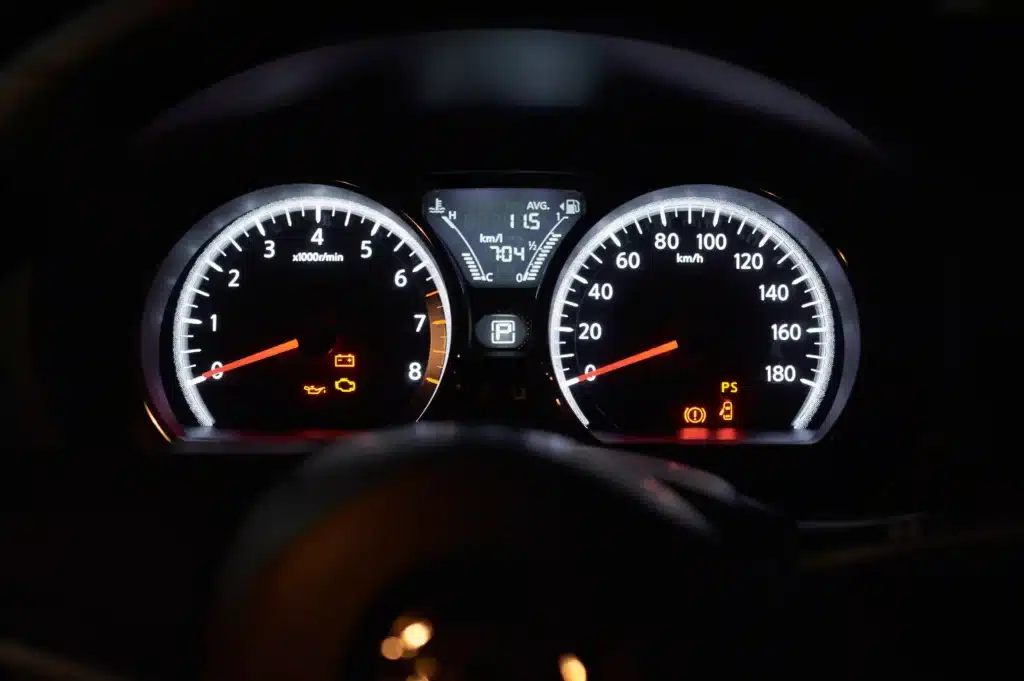
These class action lawsuits also allege that the emergency braking feature randomly stops working, making it unreliable even if the feature otherwise functioned as intended. In such cases, the following warning shows up on the dashboard: “Front radar unavailable due to obstruction.”
HOW DOES AUTOMATIC EMERGENCY BRAKING WORK?
Automatic/Forward Emergency Braking is an autonomous driving technology that is supposed to prevent crashes by detecting obstacles and, if needed, depressing the brakes.
Automatic Emergency Braking is part of a technology suite called Intelligent Safety Shield, or ISS. This suite comes with safety technologies such as Forward Collision Warning, lane departure warning, adaptive cruise control systems and other driver assist systems.
The autonomous emergency braking warning light is also designed to provide the necessary alerts to drivers.
Nissan’s Forward or Automatic Emergency Braking system works by relying on radars and front distance sensors in the front grille to monitor a car’s proximity to obstacles ahead. Potential obstacles include people, cars, trucks, and other structures.
The AEB system then provides an obstacle warning to the driver. If the driver fails to respond in time (either by evading the obstacle or braking), then the emergency braking system hits the brakes. The vehicle will stop or decelerate, depending on the circumstances.
These safety systems were intended to prevent frontal collisions with pedestrians, vehicles and other obstacles. However, Nissan’s AEB allegedly malfunctions in ways that puts drivers at an increased risk of getting rear-ended.
HOW HAS NISSAN RESPONDED?
Nissan has allegedly known about the Nissan AEB problems since at least 2015 and sold these faulty vehicles anyway. According to these class action lawsuits, Nissan has refused to offer warrantied repairs, told several consumers their vehicles were fine and refused to offer any repairs to many affected consumers.
Nissan allegedly tried to conceal the defect from consumers. Nissan advertised the emergency braking systems as “intelligent” systems that successfully prevented crashes. However, Nissan sent several technical service bulletins (TSBs) to its dealers, many of which reported problems in the Forward Emergency Braking, Automatic Emergency Braking and Forward Collision Warning systems.
It took action from federal regulators and consumer advocacy groups to uncover the scope of the problem. After being petitioned by auto safety advocacy groups, the National Highway Traffic Safety Administration launched a probe into Nissan vehicles with these emergency braking systems. The probe covered about 554,000 model year 2017–2018 Nissan Rogue vehicles. NHTSA uncovered 800 complaints, 14 crashes and five injuries related to these emergency braking systems.
Nissan faced so much pressure from safety advocacy groups and class action lawsuits that in 2020, it revealed it was aware of more than 1,400 reports of faulty emergency braking systems in those Nissan Rogue models alone – almost twice the number of complaints uncovered in the initial probe.
At the time that Nissan confessed to these reports, it had only offered a service campaign for affected drivers the previous year. However, service campaigns are not held to the same reporting standards as recalls, which allowed Nissan to charge consumers for critical safety repairs and partially brush the problem under the rug.
Those complaint, crash and injury counts come from the records NHTSA published while its Rogue investigation was open. As of August 2026, a driver does not need a recall or a class action ruling to bring an individual lemon law claim in California. What decides an individual claim is the vehicle’s own repair history.
IS MY NISSAN A LEMON?
Your Nissan, equipped with Automatic Emergency Braking, may be a lemon if it shows the following problems:
- “Front radar unavailable due to obstruction” message on your dashboard
- Alerts or warnings of obstructions that are not there
- Unexpected vehicle deceleration
- Sudden and unexpected braking
- Sudden deactivation of Forward or Automatic Emergency Braking system
Recurring problems with automatic braking systems can make your vehicle unsafe to drive. If Nissan or an authorized repair shop cannot fix your vehicle within a reasonable number of attempts, your vehicle may be a lemon.
The number of repair attempts considered “reasonable” can differ on a case-by-case basis. The specific problems with automatic braking systems will also vary depending on each consumer’s situation.
Consult a California lemon law attorney about your situation and legal rights. California’s lemon law, the Song-Beverly Consumer Warranty Act, can require a manufacturer to repurchase or replace a vehicle it cannot repair within a reasonable number of attempts, and our California lemon law FAQ walks through how that works. If you are included in one or more class action lawsuits, you may need to opt out before certain deadlines to retain your individual right to sue.
NISSAN KICKS AEB AND FORWARD COLLISION WARNING COMPLAINTS
The Nissan Kicks carries the same Forward Collision Warning and Automatic Emergency Braking hardware as the rest of the lineup, and the chief complaint from Kicks drivers is a malfunctioning front collision sensor. That sensor is what the vehicle uses to spot pedestrians, cars and other obstacles ahead. When it misreads the road, the Kicks warns about obstacles that are not there, brakes on its own, or shuts the safety system off entirely. The accounts below were submitted to the National Highway Traffic Safety Administration and have been edited for grammar and clarity.
Kicks owners report false activations starting almost immediately after purchase. One driver said the sensors began failing inside the first 300 miles and that the fault outlived repeated dealer visits, including a front sensor replacement that failed again within a day.
Within the first 300 miles, the sensors started to malfunction. The dealer replaced the side sensors. The front sensor relating to the AEB started to malfunction. I now have 6,000 miles on the car. It has been in and out of shop with no clear solution to the problem. They replaced the front sensor, but within 24 hours, it was malfunctioning again. I was involved in an accident 6 days ago, the AEB did not engage, the sensors did not engage.
Complaint submitted to NHTSA, 2018 Nissan Kicks
Other Kicks complaints describe phantom braking in completely ordinary conditions: entering a tunnel at roughly 45 miles per hour with nothing in the vehicle’s path, driving into low morning sun, moving through a parking garage, and running on cruise control on the highway. One owner counted at least six unprompted stops.
The sensor that states “there has been a malfunction in the front braking system” comes on randomly. The AEB system also stops the car at random times when nothing is in the road, good weather, sometimes going 75mph on the highway. Same thing has also happened driving in a parking garage or down a main road. I have also been in cruise control on the highway and this braking system comes on. I thought it was an isolated incident but it has happened at least 6 times.
Complaint submitted to NHTSA, 2020 Nissan Kicks
Kicks drivers also report the front radar obstruction message and the collision warning light appearing at random regardless of weather, a warning that interferes with cruise control, and in one case an accident in which the braking system never engaged at all. The repair history is what matters for a lemon law claim, and it is where these accounts converge: owners describe dealers clearing codes, adjusting or recalibrating the sensors and handing the vehicle back without replacing the failed part. One driver logged five shop visits for the same warning at 4,200 miles. The same front radar warning turns up across other Nissan models, so a Kicks is not an isolated case.
WHERE IS THE FRONT SENSOR ON A NISSAN KICKS?
The Kicks front radar and distance sensors sit behind the front grille, facing the road ahead, which is the same placement Nissan uses across the models listed on this page. That location is why drivers are so often told the warning must be dirt, rain, snow or something blocking the bumper. If the grille area is clear and the warnings keep coming, and the dealer keeps clearing codes or recalibrating instead of repairing the fault, debris is not a credible explanation and the vehicle may qualify as a lemon.
HOW DO I OPT OUT OF A NISSAN AEB CLASS ACTION LAWSUIT?
Those represented by one or more class action lawsuits may opt out and take an individual lemon law case against Nissan. An individual claim is decided on your own vehicle’s repair record rather than on a group average, and the remedies available are different from a share of a class settlement: a repurchase, a replacement vehicle or a cash settlement, depending on the facts of your case. If you are included in at least one lawsuit related to automatic emergency braking problems, you may need to opt out before a certain deadline to retain your individual right to pursue a lemon law claim.
Once you opt out, you may pursue charges more specific to your situation. Contact a California lemon law attorney about your individual right to pursue a lemon law claim.
Reviewed by Roger Kirnos, Managing Attorney, California State Bar No. 283163
Do You Have A Lemon Vehicle?
"*" indicates required fields