
Your Honda or Acura shuts the engine off at a red light, exactly the way the system is designed to. The light turns green, you lift your foot off the brake, and nothing happens.
If you have sat through that, you know firsthand this is no quirk to laugh off. That is the Auto Idle Stop system failing to restart the engine, and it has produced an open federal investigation and a class settlement that is now final.
Most of what that settlement gives you costs nothing and asks nothing clever of you. The parts that do ask something of you are on a clock, and one of those dates is close.
What Is Actually Wrong With the Honda Auto Idle Stop System?
Auto Idle Stop is a fuel-saving feature. It cuts the engine when you come to a stop and is supposed to fire it back up the instant you release the brake. On the vehicles at the center of this dispute it is paired with the 3.5L V6 and the nine-speed automatic transmission.
That pairing covers the Honda Pilot, Passport and Ridgeline along with the Acura TLX and MDX, in model years running from 2015 to 2021 depending on which one you drive. When the restart fails, the engine simply stays quiet at the front of an intersection. Owners report shifting into park to force a restart, and some have needed a jump start before the vehicle would move at all.
Honda answered with service bulletins in January 2023 describing a two-stage remedy. The first stage is a PGM-FI software update, and if the failure comes back, the second stage is a starter, a relay or a valve adjustment. That is the Auto Idle Stop system problem Honda has been working through by bulletin ever since, without redesigning the feature itself.
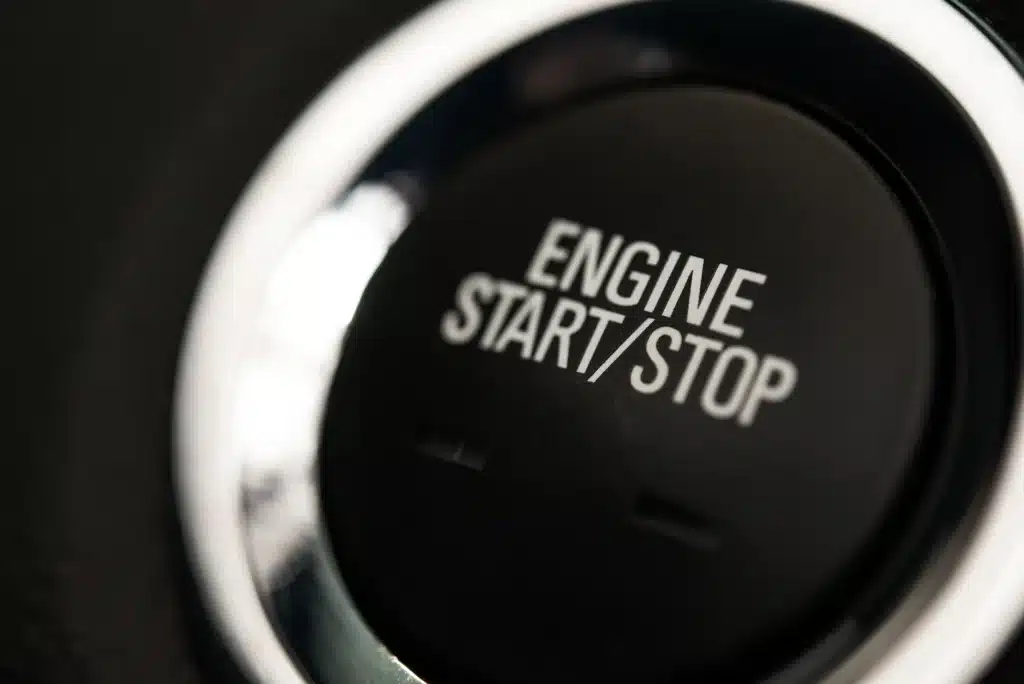
The hardest part for most owners is that the failure is intermittent. It can happen twice in one week and then stay away for a month, which is how a service ticket comes back saying the technician was never able to make it happen. You can switch the feature off with the button near the gear shift, but it turns itself back on the next time you start the car, so that is a workaround rather than a fix.
Is There a Honda Idle Stop Recall?
No. If you have been searching for a Honda Pilot auto idle stop recall, there is not one, and nothing else in the Honda or Acura lineup has been recalled for this either. That is the word owners look for first, and its absence is most of the reason this page exists.
What does exist is a federal engineering analysis. Regulators opened a formal engineering analysis in March 2025 after complaints kept arriving on the Pilot, many of them from Touring and Elite trims where the failure repeated. The analysis covers roughly 2.2 million Honda and Acura vehicles across a decade of model years, and it is still open.
That scope is wider than the settlement reaches. Honda Odyssey idle stop reports sit inside the investigation even though the Odyssey is not on the settlement vehicle list. Investigators have logged 1,348 reports, four crash or fire incidents and two injuries.
The second thing that exists is the settlement itself, which came out of the Honda idle stop class action rather than out of any recall order. You can confirm what is open against your own VIN through the federal recall lookup. No recall does not mean no remedy, and here the remedy is the settlement.
What Does the Auto Idle Stop Settlement Give Me?
First, it covers you no matter where you live. This is a nationwide class reaching anyone who bought or leased one of the covered Honda or Acura vehicles anywhere in the United States, all fifty states and Washington, D.C.
Second, it gives you the repair for free. The valve adjustment and the updated starter motor assembly are covered, and once the PGM-FI software update has been done, the dealer cannot require you to prove the symptom is present before replacing the starter. That last piece carries more weight than it sounds like, because an intermittent failure is exactly the kind a service department cannot reproduce on demand.
Third, it pays you back. Money you already spent on a starter, a relay, a valve adjustment or a tow is claimable, and that claim goes to the settlement rather than to your dealer.
The warranty piece is separate, and it is the part owners most often misread. Honda had already extended coverage for this repair out to 10 years from the date the vehicle was first sold or leased, and that underlying extension reaches every covered model year rather than only the oldest ones.
What the settlement adds sits at the far end of that 10 year window, where it was about to run out. Model year 2015 vehicles receive 24 additional months and model year 2016 vehicles receive 18, applied automatically with nothing to sign.
Then come the limits, and they are real. There is no cash payment simply for owning one of these vehicles, and a vehicle that already received the updated starter for free under warranty sits outside the class for the repair benefits, although those owners keep the right to claim back what they paid out of pocket. The window to exclude yourself has already closed, so if you did nothing, you are in the class.
How Do I Claim the Honda Repair & Reimbursement?
For the repair, call your Honda or Acura dealer, give them the VIN and tell them the engine is not restarting after Auto Idle Stop shuts it down. Honda Automobile Customer Service at 1-800-999-1009 can confirm warranty coverage and any open campaigns tied to that VIN before you go in.
For the money, the claim goes to a court-appointed settlement administrator rather than to Honda. The settlement’s deadline for claiming costs you have already paid is August 18, 2026, and that is the date to put on the calendar if your repair receipts are already sitting in a drawer.
Costs you pay after that date work differently. Each one runs on its own rolling 60-day deadline from the day you incur it, so a tow next spring still has a claim window, it just closes 60 days after the tow. Keep the invoice every single time, because reimbursement here is documentation driven.
The warranty extensions are the exception to all of this. They apply automatically, they need no claim form, and they do not expire on August 18. Ask for a written repair order at every dealer visit anyway, including the ones where the technician finds nothing, because that paperwork is what carries you into the next question.
What If My Honda Keeps Doing It After the Fix?
This is the question the settlement does not answer. It buys you the repair and pays back your receipts, but it does not redesign Auto Idle Stop and it does not promise the fix will hold. The federal investigation stayed open for that exact reason, because owners kept reporting the same failure after the bulletin work had been done.
If your vehicle is still doing it, the law that matters in California is the Song-Beverly Consumer Warranty Act, the statute behind most California lemon law claims. A vehicle that will not move when the light turns green is a warranty problem Honda has had more than one chance to cure, and that is the ground the statute stands on.
An expired factory warranty is not automatically the end of it. What usually matters is when the defect first showed up and got written down, rather than when you finally got around to acting on it.
Being in the settlement class does not by itself close off every other option either. A class settlement releases specific claims, and whether your own repair history supports something outside that release is a question to ask rather than assume.
If the engine has quit on you more than once and the dealer keeps handing the keys back, that repair history is worth having read by someone who does this for a living. Our Honda lemon law attorneys review it at no cost, and Lemon Law Help can tell you whether your record supports anything beyond what the settlement already hands you.
That conversation keeps. The calendar does not.
The settlement set August 18, 2026 as the last day to claim money already spent on a starter, a relay, a valve adjustment or a tow, and after that date each new cost runs on its own rolling 60 day window from the day you incur it. If those receipts are sitting in a drawer, the settlement administrator is at 888-888-3082, and that call is the only thing on this page with an expiration date.
Reviewed by Roger Kirnos, Managing Attorney, California State Bar No. 283163.